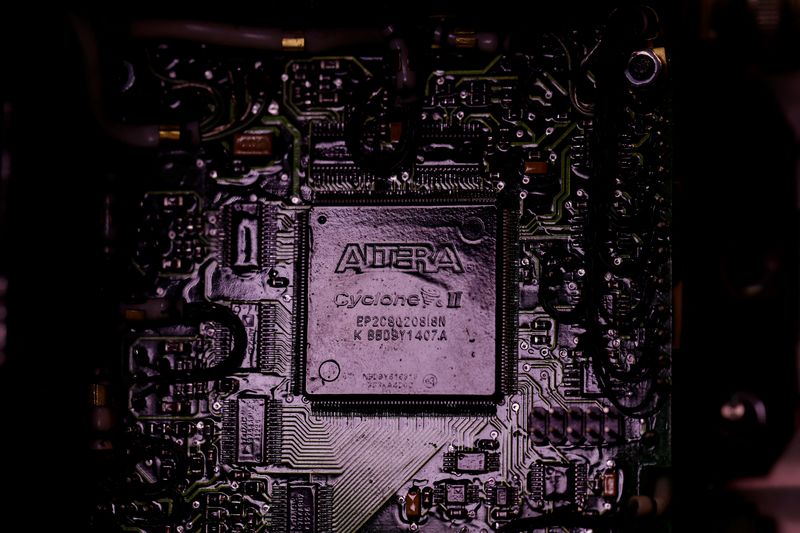
Altera, a company specializing in programmable chips (FPGA) that has spun off from Intel, is demonstrating significant revenue growth of 20% annually and more than a twofold increase in operating profit.

What Happened
The primary growth drivers are the artificial intelligence and robotics segments, where FPGAs act as the "nervous system" for processing sensor data. Altera became the first programmable chip provider to implement DDR5 memory support and is preparing for an IPO following the completion of its spin-off from Intel.
Context
The company's technology stack is being strengthened through the use of advanced 2nm and 3nm process nodes from TSMC. This allows Altera to compete directly with Xilinx (AMD) in high-performance semiconductor market segments.
Why It Matters for the Industry
The growing demand for FPGAs highlights the critical need for specialized solutions for edge data processing (sensor fusion) that complement GPU computing power. The transition to DDR5 and new process nodes is changing the competitive landscape in the high-performance computing segment.
Why It Matters for Users
For robotics and Edge AI developers, Altera's technologies provide flexible, real-time integration of various sensors. The emergence of an independent player with DDR5 support increases the availability of high-performance solutions for prototyping complex autonomous systems.
Sources
Author
Look at AI, Editorial Team