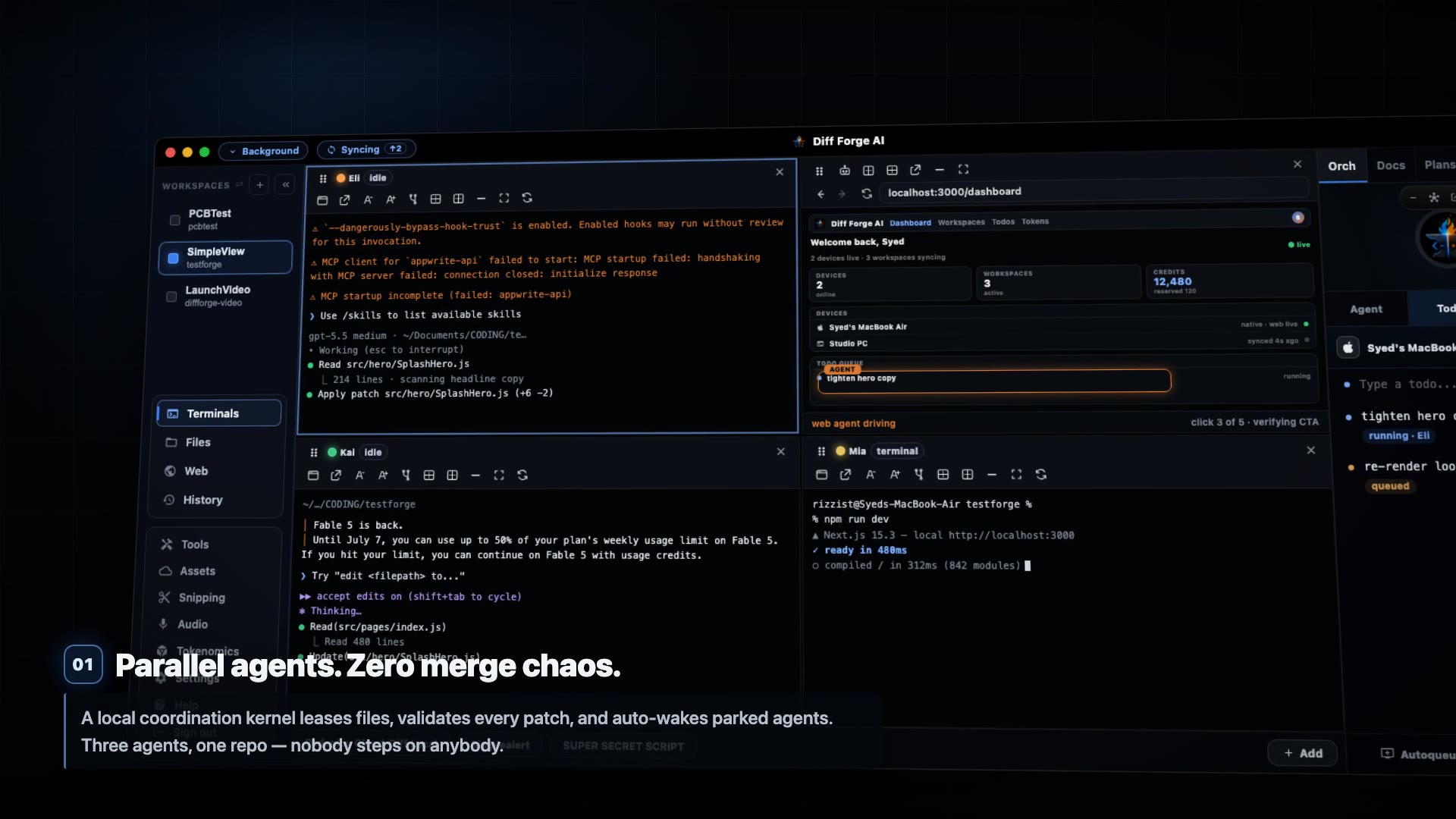
Diff Forge AI has been introduced—a specialized Agentic Development Environment (ADE) that enables the coordination of multiple AI agents, such as Codex, Claude Code, and OpenCode, within a single project.
What Happened
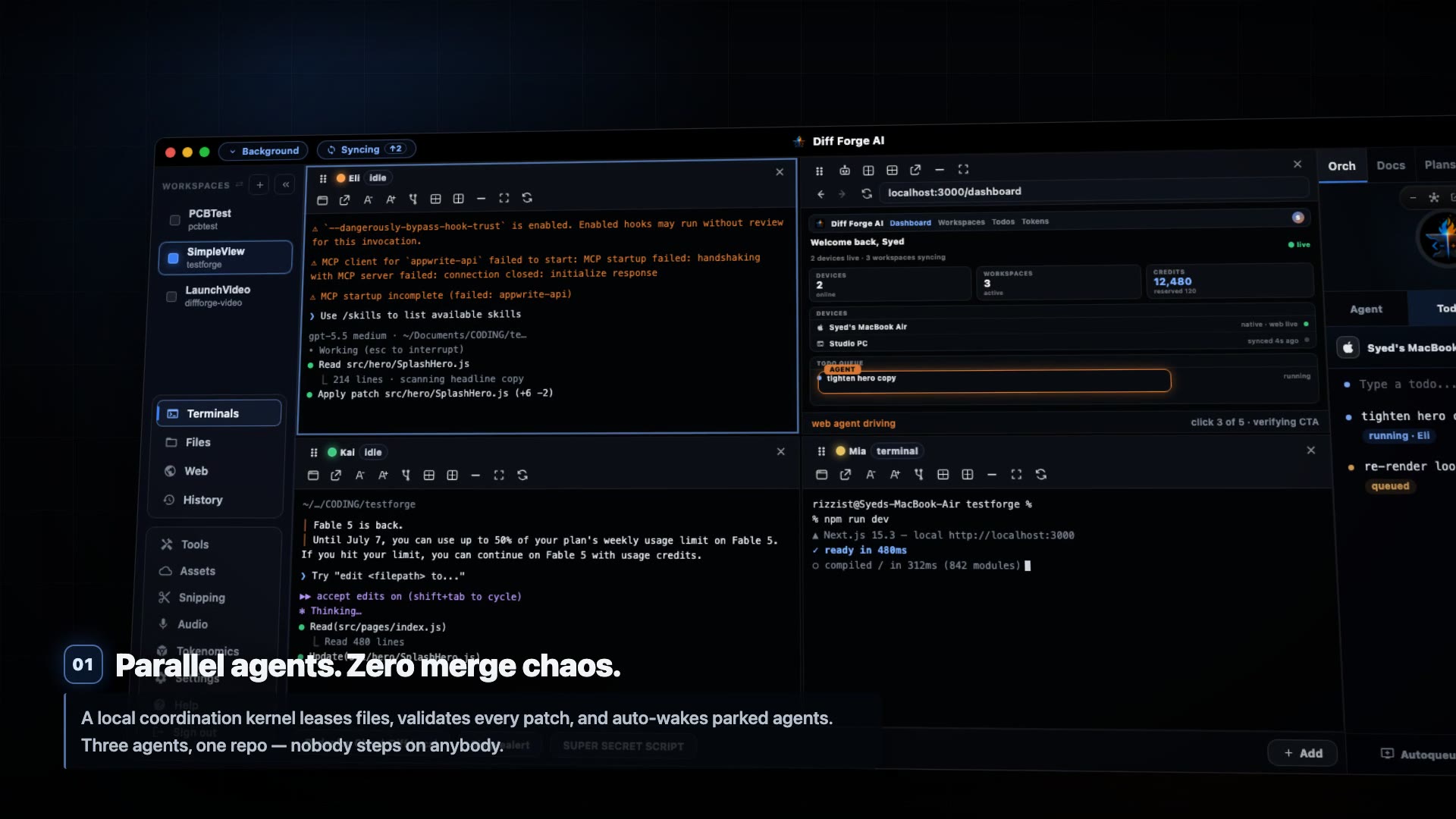
Developers have unveiled the Diff Forge AI platform, which utilizes a "local code — cloud management" hybrid architecture. In this scheme, code execution and file storage remain on the user's local machine, while only commands and session states are transmitted via the cloud. The system includes file lease management tools, task automation through Loop Spaces (an agentic equivalent of cron), and voice control capabilities using Whisper or Deepgram.
Context
The project acts as an infrastructural orchestration layer rather than a new foundational model. It addresses the problem of coordinating disparate AI agents and prevents conflicts when different tools attempt to edit files simultaneously.
Why It Matters for the Industry
Diff Forge AI promotes the concept of "local-first" agentic development. This is critical for the enterprise segment, as it allows the use of powerful cloud models while preserving intellectual property (IP) and minimizing the risks of codebase leaks.
Why It Matters for Users
Developers gain the ability to effectively manage multiple agents simultaneously while avoiding file access conflicts. The web interface allows for remote control over development processes and the use of voice commands to manage agents.
What Is Not Yet Known / Limitations
Transmitting commands and session states through the cloud may create new risks, such as the leakage of metadata or proprietary code logic. Additionally, the project is in its early stages, requiring verification of the reliability of its agent state synchronization mechanisms.
Sources
Author
Look at AI, Editorial Team