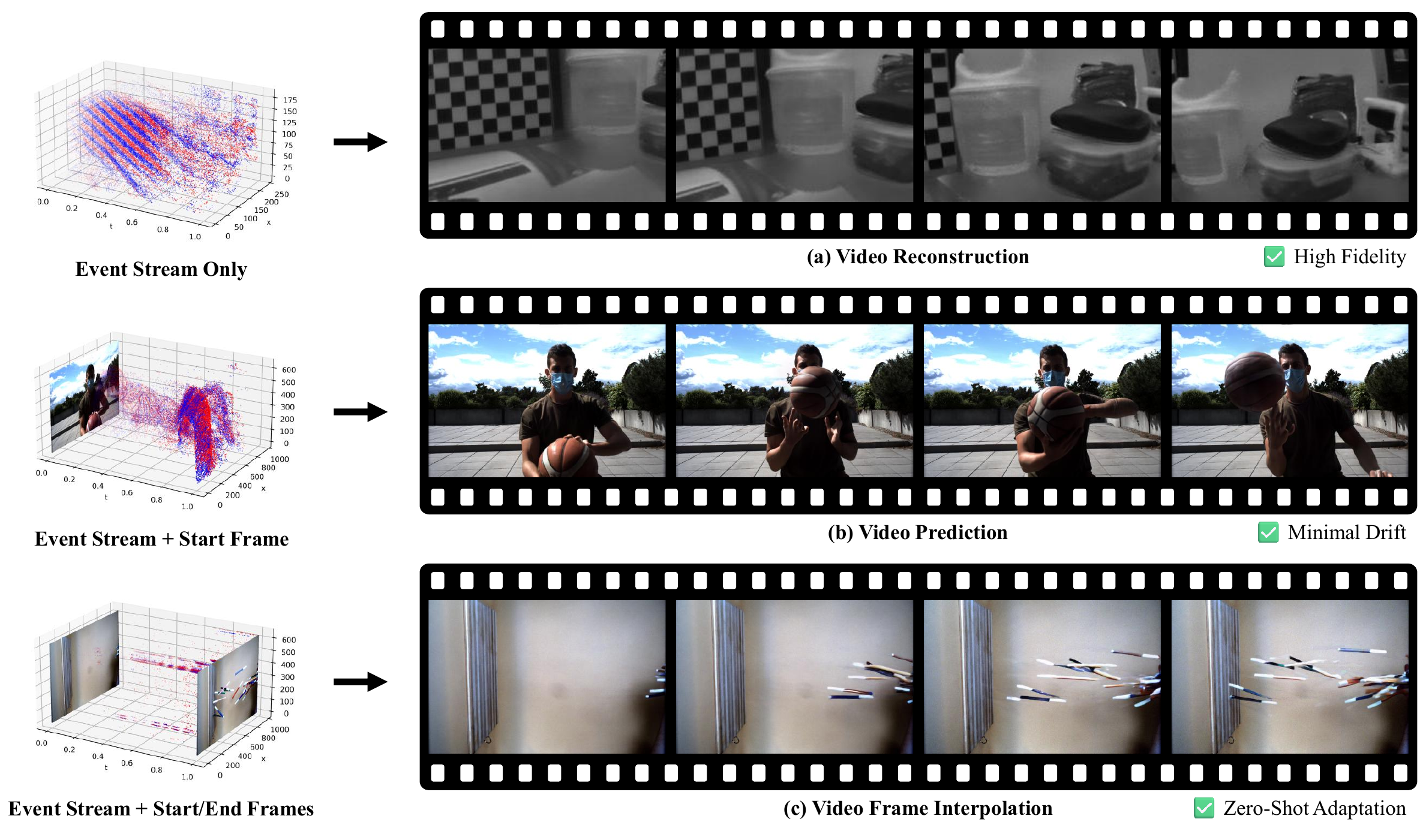
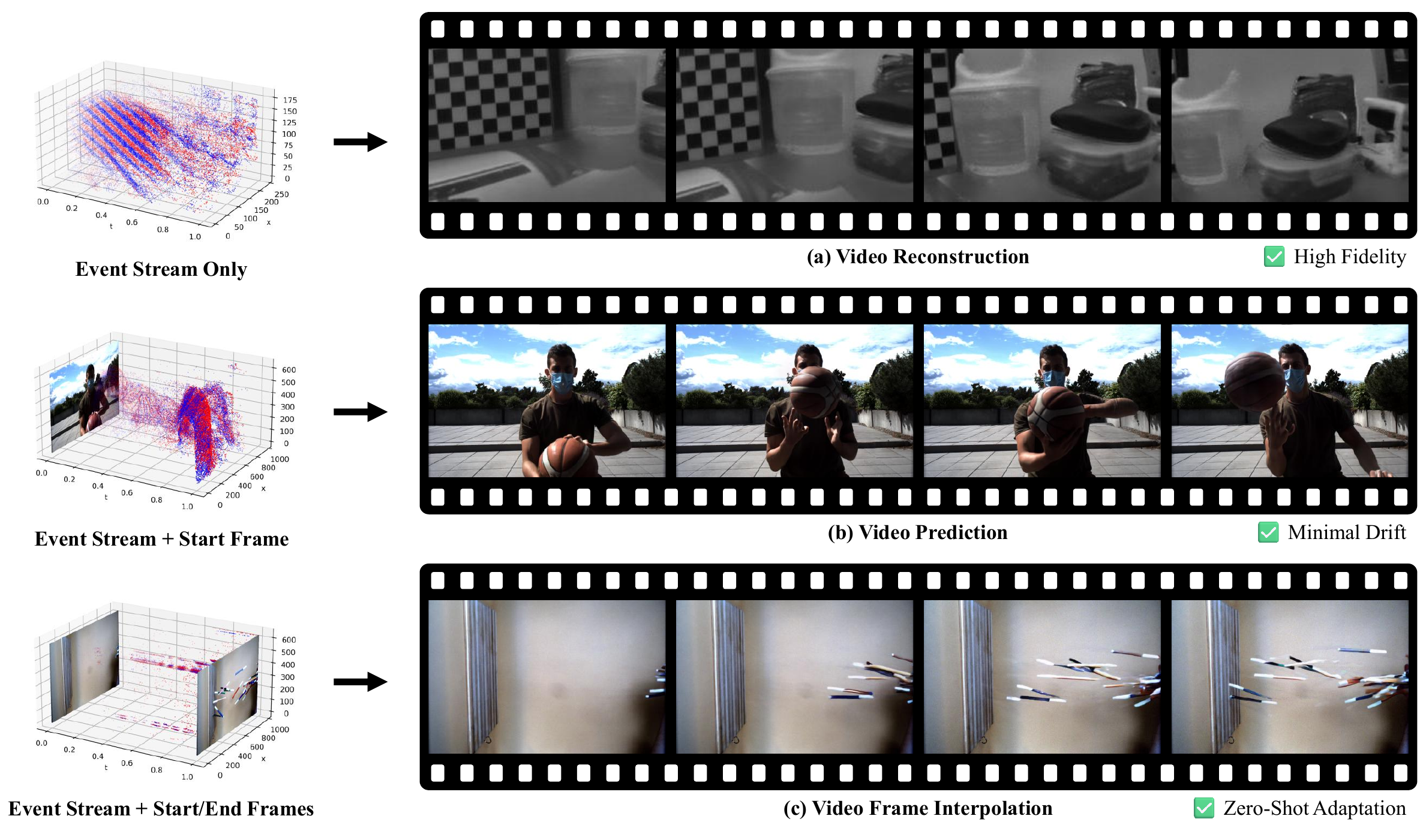
LongE2V has been introduced—a unified framework that utilizes video diffusion models to process paired event streams. The technology enables reconstruction, prediction, and frame interpolation based on event sensor data, providing high stability over long temporal intervals.

What Happened
The developers of LongE2V have presented a system that unifies video reconstruction, prediction, and interpolation into a single process. To combat the problem of temporal drift in long sequences, the authors implemented Autoregressive Unrolling and Adaptive Context Switching methods. The framework relies on pre-trained diffusion models, presumably based on CogVideoX-5b.
Context
Traditional methods for processing event sensor data often face issues with instability and texture blurring when dealing with high-speed streams. LongE2V proposes a transition from working with sparse and "noisy" data to creating a continuous, high-quality video sequence using generative models.
Why It Matters for the Industry
For the industry, this solution addresses critical problems in next-generation computer vision, especially regarding high-speed cameras. The emergence of such tooling allows for the creation of specialized hardware-software stacks and the potential integration of these methods into specialized SoCs for real-time data processing.
Why It Matters for Users
This technology paves the way for creating ultra-clear video from sparse data, which has direct applications in robotics, autonomous driving systems, and the analysis of ultra-fast physical processes. Researchers can use the framework or its derivatives (such as LoRA adapters) to prototype reconstruction algorithms.
What Is Not Yet Known / Limitations
At the current stage, there is uncertainty regarding the technology's readiness for production environments: specific data on latency, VRAM requirements, and the availability of ready-to-use APIs are missing.
Sources
- LongE2V Project Page
- LongE2V GitHub Repository
- LongE2V: Long-Horizon Event-based Video Reconstruction, Prediction, and Frame Interpolation with Video Diffusion Models
Author
Look at AI, Editorial Team