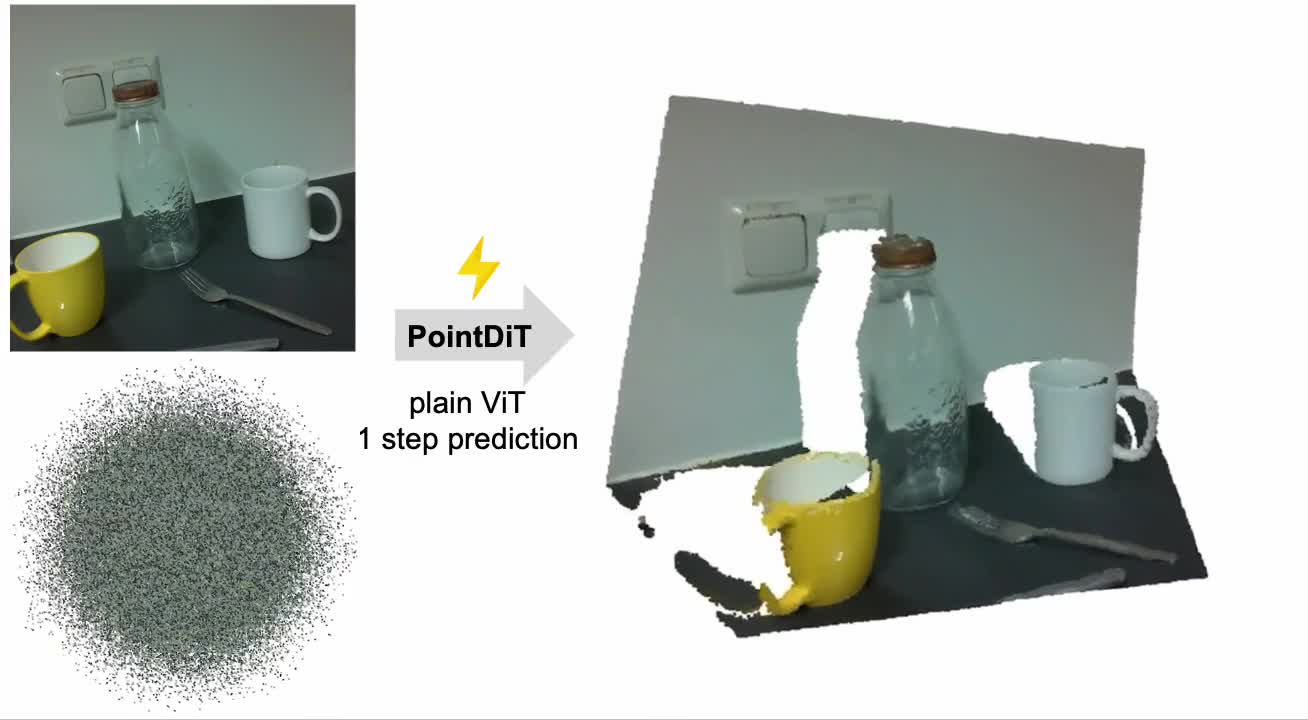
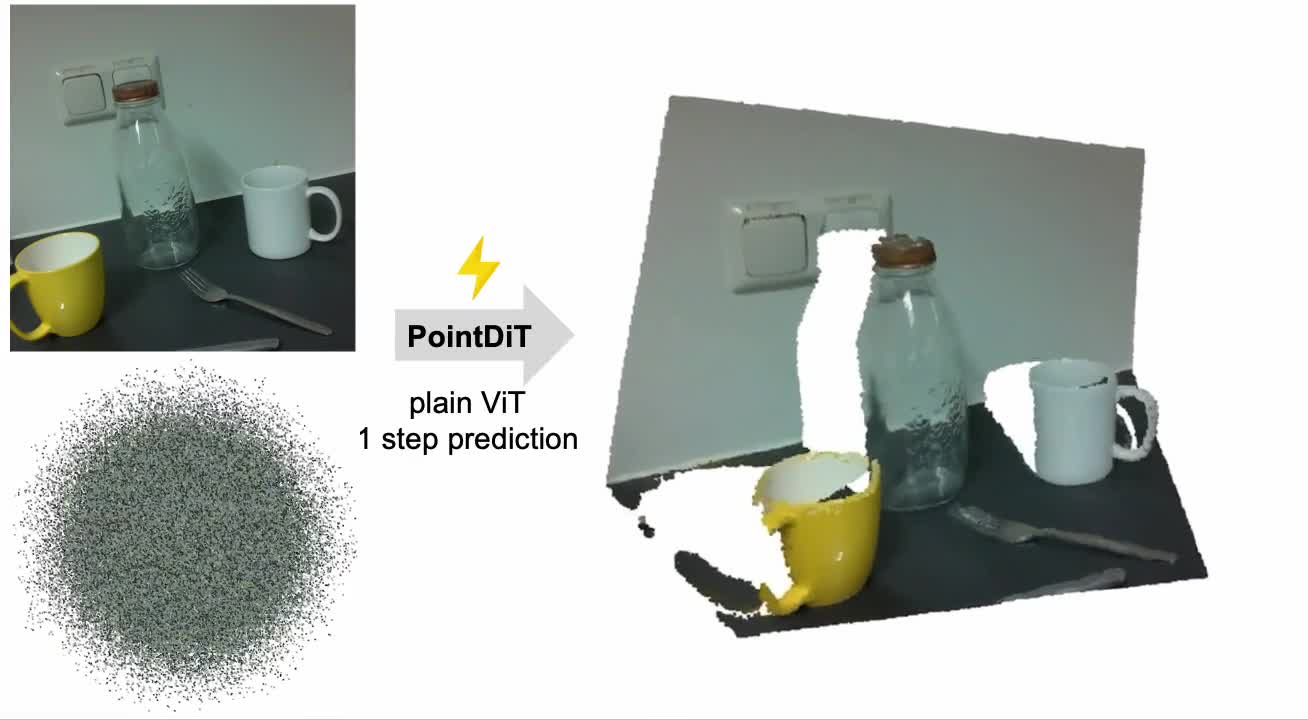
PointDiT has been introduced—an innovative model for estimating 3D geometry from a single monocular image. Unlike traditional methods that use latent space or deterministic regression, PointDiT applies Flow Matching technology directly in the pixel space (raw point maps), allowing for unprecedented detail in geometry reconstruction.
What Happened
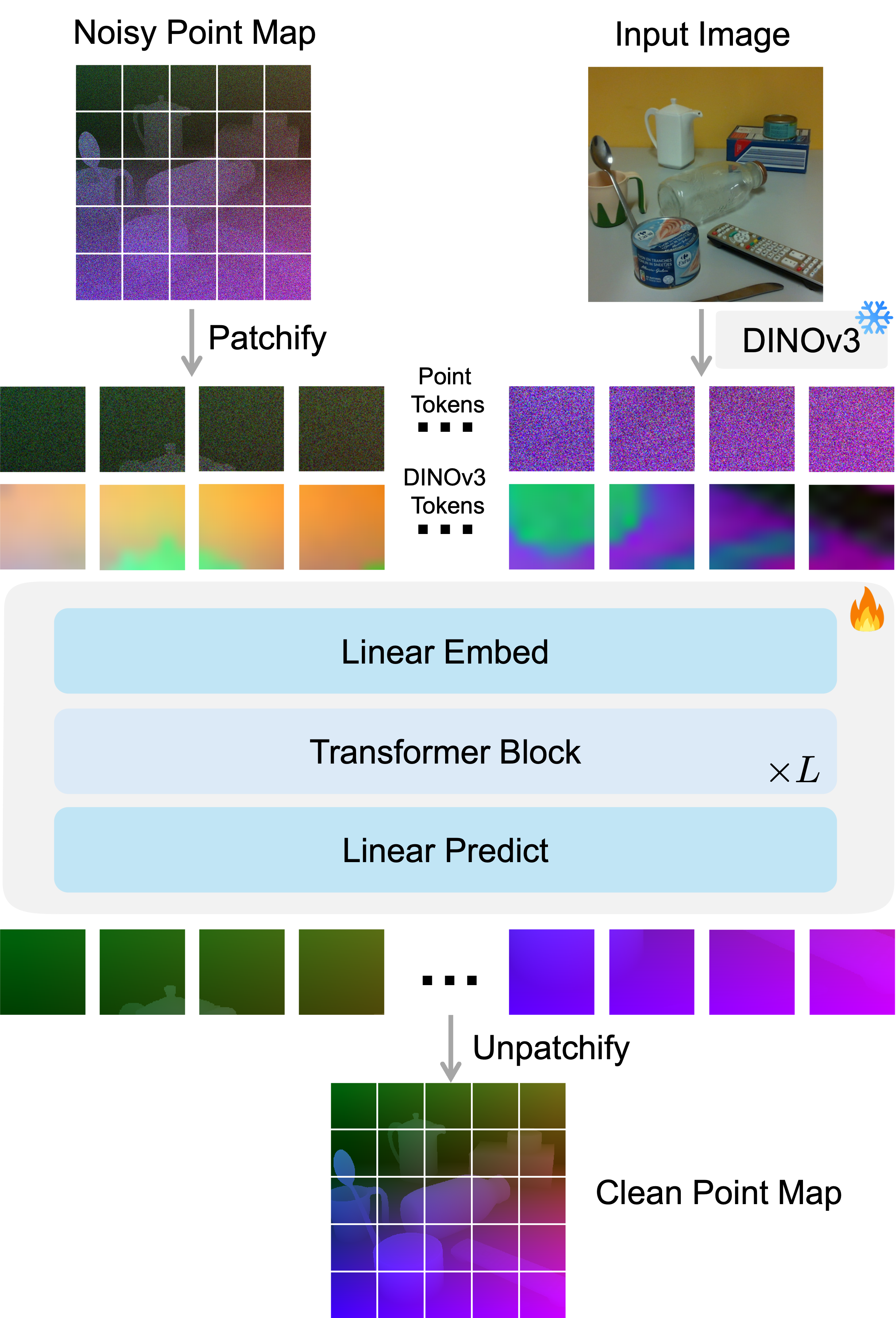
The PointDiT model has been developed, which uses the principle of pixel-space diffusion for 3D geometry estimation. Instead of compressing data through a VAE, the architecture works directly with point maps, which eliminates the loss of fine details and the blurring of thin structures that often occur when using latent spaces.
Context
Existing monocular geometry estimation methods often face a "bottleneck" problem due to the use of VAEs (Variational Autoencoders) or the averaging of responses during regression. This leads to a loss of accuracy when working with complex objects. PointDiT solves this problem by shifting to a diffusion paradigm directly in the data space.
Why It Matters for the Industry
For the AI and computer vision industry, this signifies a shift in architectural paradigms. Moving toward pixel-space diffusion allows for the creation of more accurate depth and normal maps, which could become a new standard for high-precision CV models and data preparation tools for 3D modeling.
Why It Matters for Users
This technology paves the way for creating high-precision Augmented Reality (AR) systems and advanced robotics capable of understanding complex scenes (including transparent and thin objects) from a standard photograph, without the need for expensive active sensors.
What Is Not Yet Known / Limitations
At the moment, uncertainty remains regarding the availability of model weights and inference speed data, which complicates the immediate implementation of the solution into commercial production systems.
Sources
Author
Look at AI, Editorial Staff