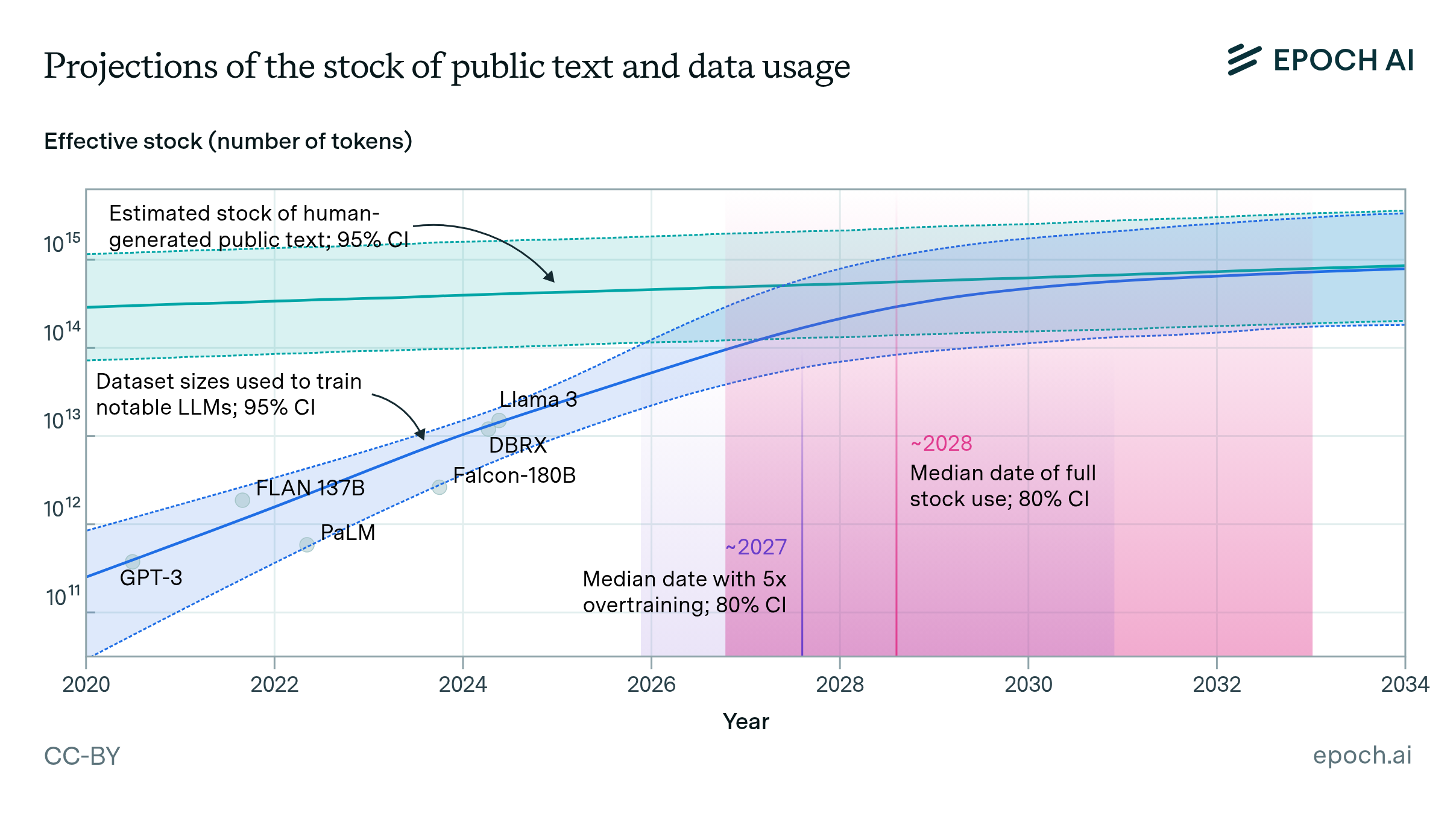
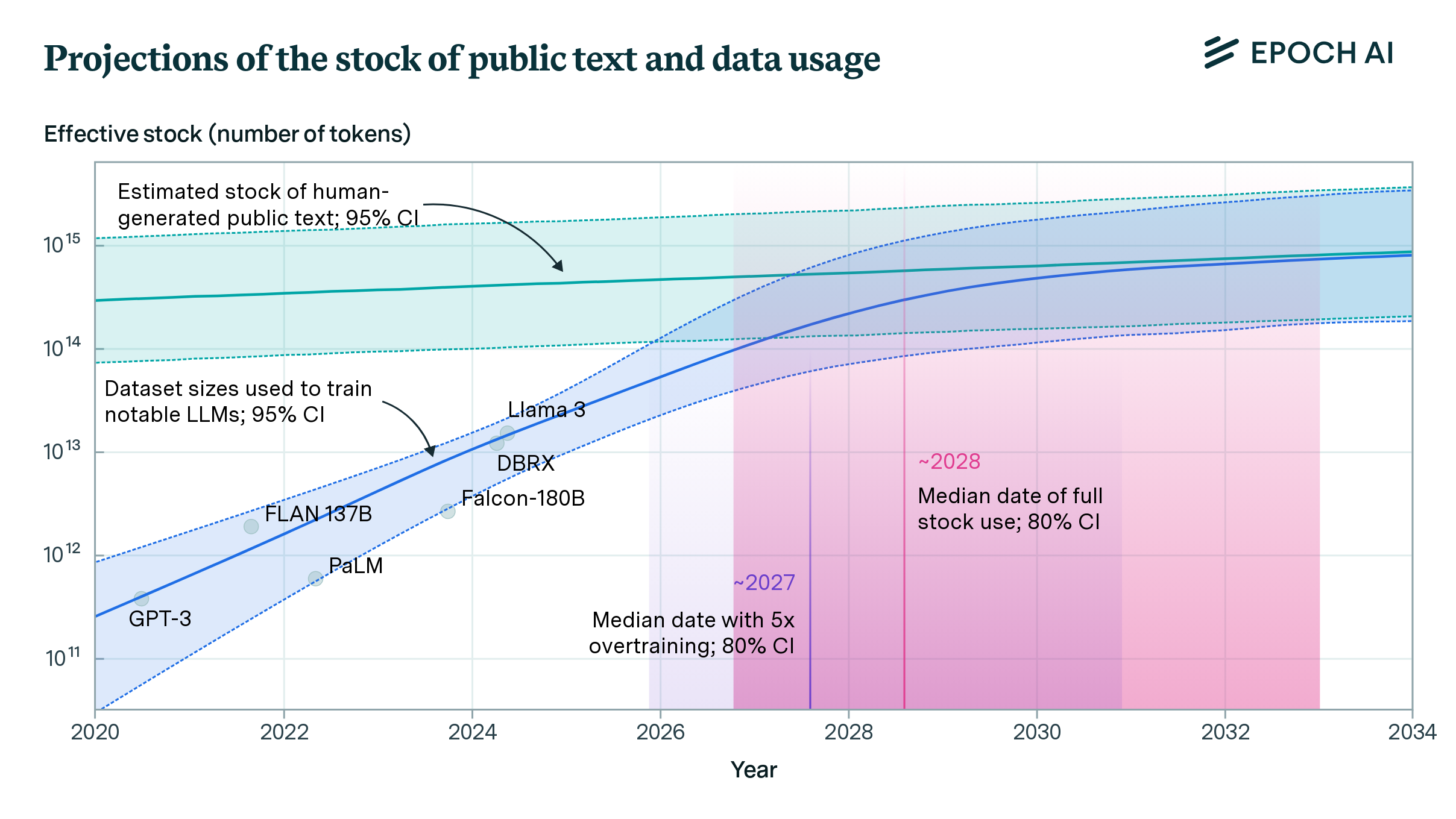
An Epoch AI study predicts that the supply of high-quality human data for training LLMs could be exhausted between 2026 and 2032. This event is triggering a fundamental shift in the industry: a transition from mass web text scraping to the creation of specialized, paid, and multimodal datasets.

What Happened
According to Epoch AI forecasts, the human resource of high-quality text data (approximately 300 trillion tokens) is nearing exhaustion. In response to this shortage, a new data "mining" market is already forming. Startups have begun actively investing in the collection of alternative content: Kled AI is attracting millions of dollars to purchase videos of everyday situations, Silencio AI is collecting audio recordings in thousands of languages, and Mercor is hiring niche experts to label complex answers.
Context
Modern Large Language Models (LLMs) rely on the large-scale use of public text content available on the web. However, the current path of scaling laws development, based on simply increasing the volume of web text, faces a physical limit of high-quality material availability. This makes multimodality (video, audio) and expert knowledge a necessary condition for the survival of training technologies.
Why It Matters for the Industry
For the AI industry, the shortage means a change in the very economics of training. Companies are forced to move from free web scraping to creating controlled and paid datasets. A key competitive advantage for developers is becoming not the model architecture, but the ownership of unique, proprietary, and high-quality multimodal data arrays.
Why It Matters for Users
For everyday users and specialists, new ways to monetize personal content and knowledge are opening up. Opportunities are emerging to earn money by providing video, audio recordings, and professional expertise (doctors, lawyers) to train specialized systems, and new directions are growing in the startup industry related to data collection and labeling infrastructure.
What Is Not Yet Known / Limitations
There is a difference in how the focus of the problem is assessed: ranging from a purely research-oriented view of the limits of scaling laws to an analysis of business opportunities and legal risks associated with intellectual property.
Sources
Author
Look at AI, Editorial Team