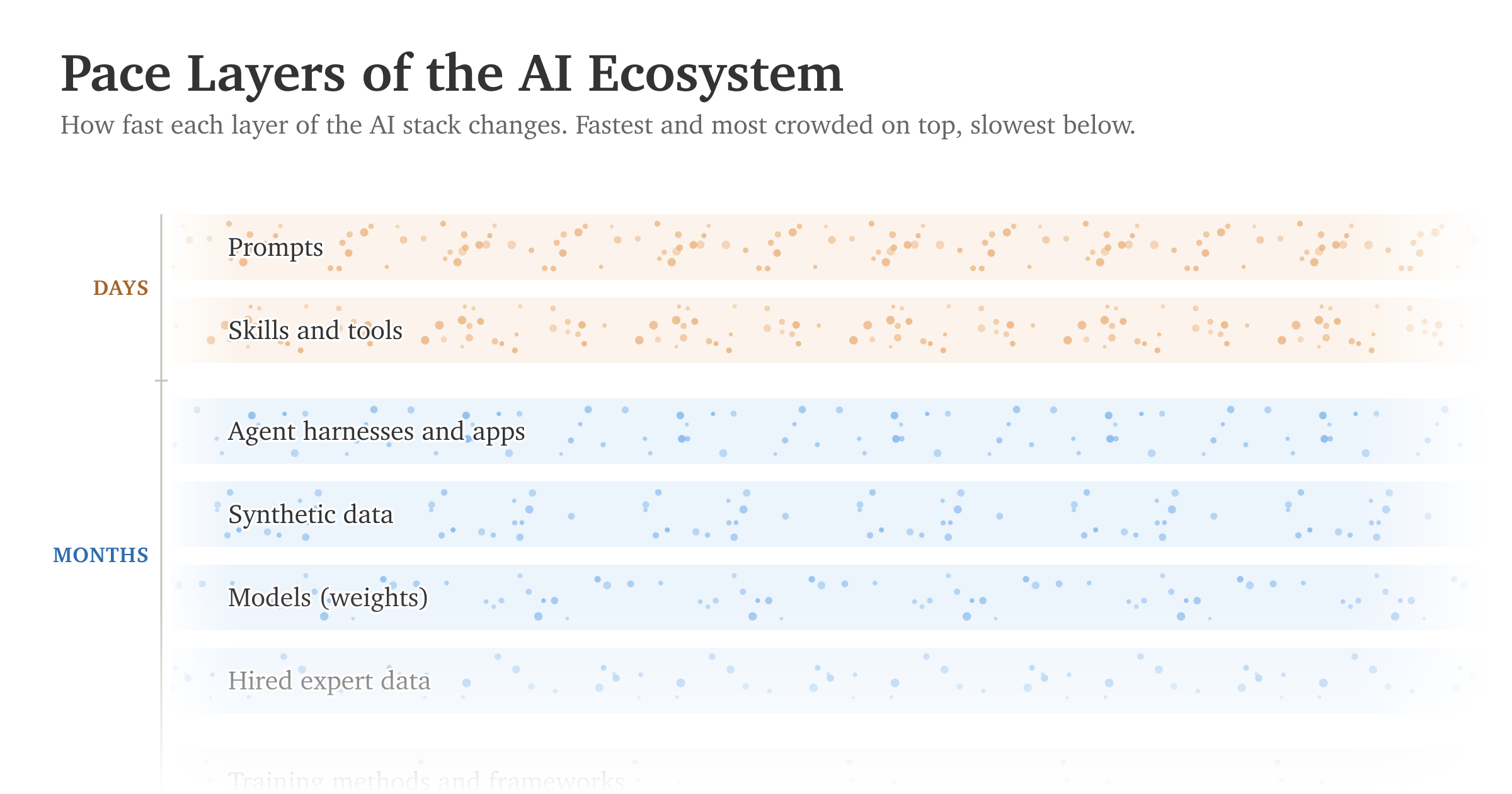
The development of artificial intelligence faces a fundamental contradiction: ultra-fast changes in application tools and prompts conflict with the slow update cycles of physical infrastructure and regulatory institutions.
What Happened
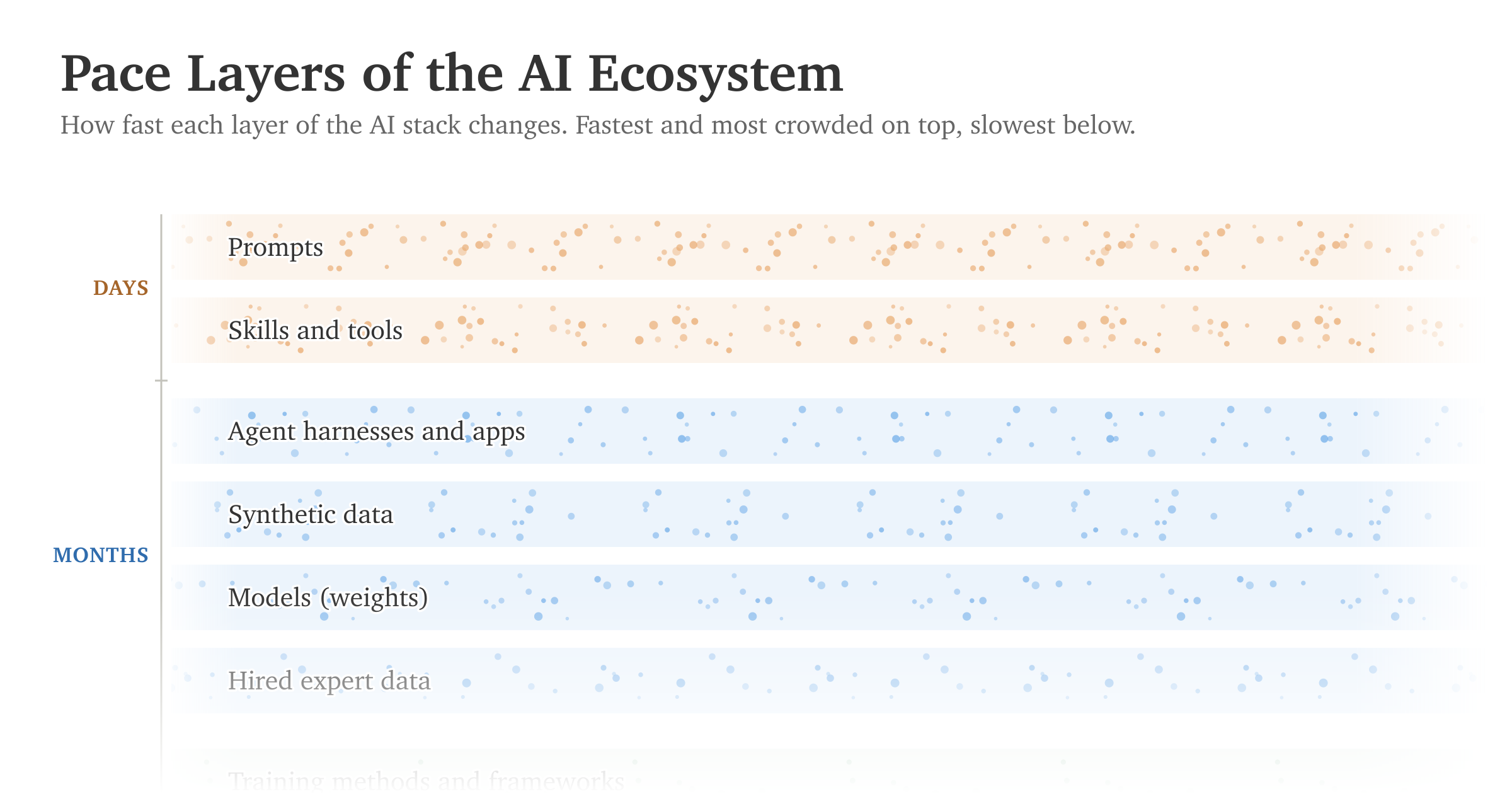
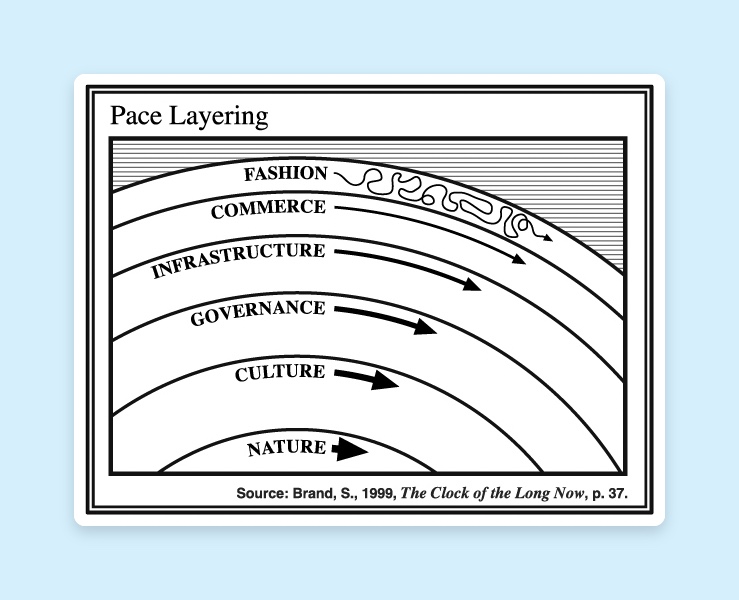
A new analytical work applies Stuart Brand's Pace Layers concept to classify the AI stack. Technologies are divided into layers with different iteration speeds: from tools and prompts that change in days, to models that require years, and fundamental infrastructure (chips, data centers, power supply) whose life cycle is measured in decades.
Context
Current social and regulatory resistance to the AI industry is a consequence of the desynchronization of these layers. Attempts to accelerate slow layers, such as governance and physical infrastructure, to the pace of application software create structural tension in the system.
Why It Matters for the Industry
For the industry, this means the existence of critical "bottlenecks," such as the shortage of organic data and delays in data center construction. Progress in neural network architectures may be limited by the physical and economic constraints of the fundamental layer, requiring a shift in investment focus from purely software solutions to resource optimization, energy efficiency, and infrastructure stability.
Why It Matters for Users
It is important for users and builders to understand that technological progress does not guarantee instant scaling. The development of new features and services may slow down due to the unreadiness of the energy environment, regulatory barriers, or a deficit of computing power.
What Is Not Yet Known / Limitations
Differences in risk perception are contextual: enterprise architects and lawyers focus on legal instability, while engineers focus on the technical limitations of software.
Sources
Author
Look at AI, Editorial Staff