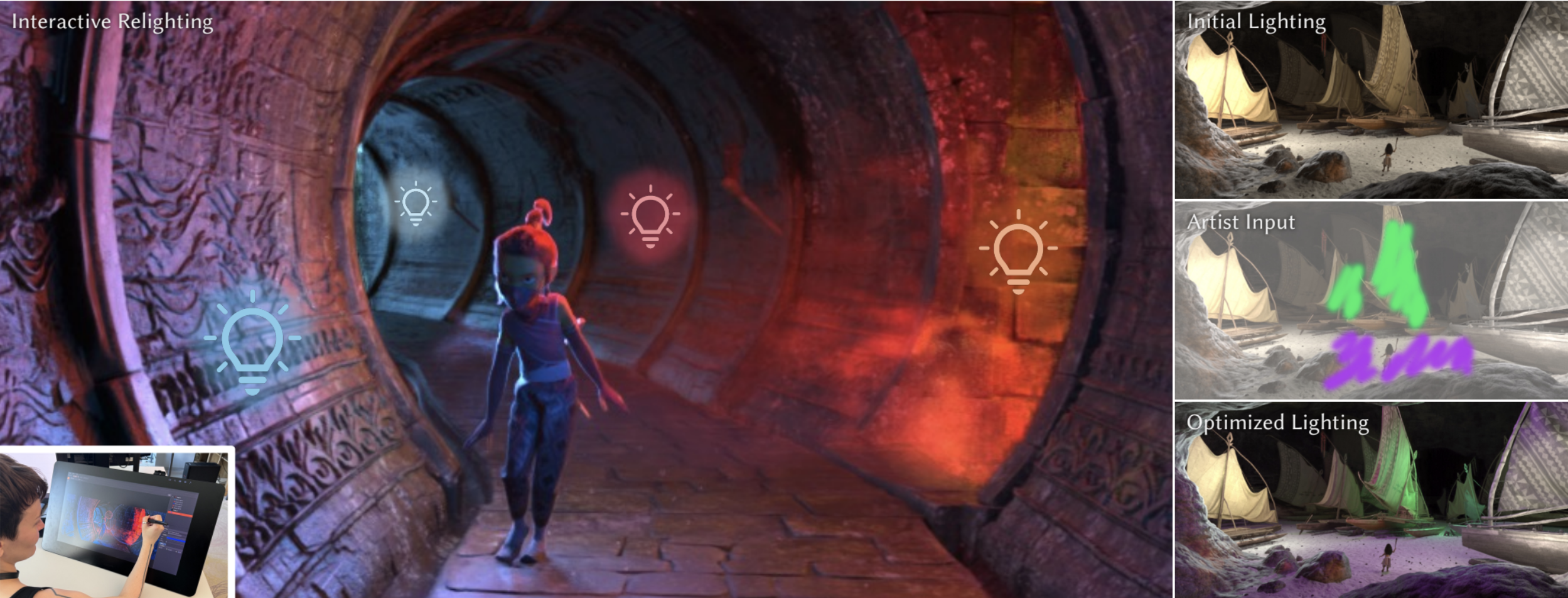
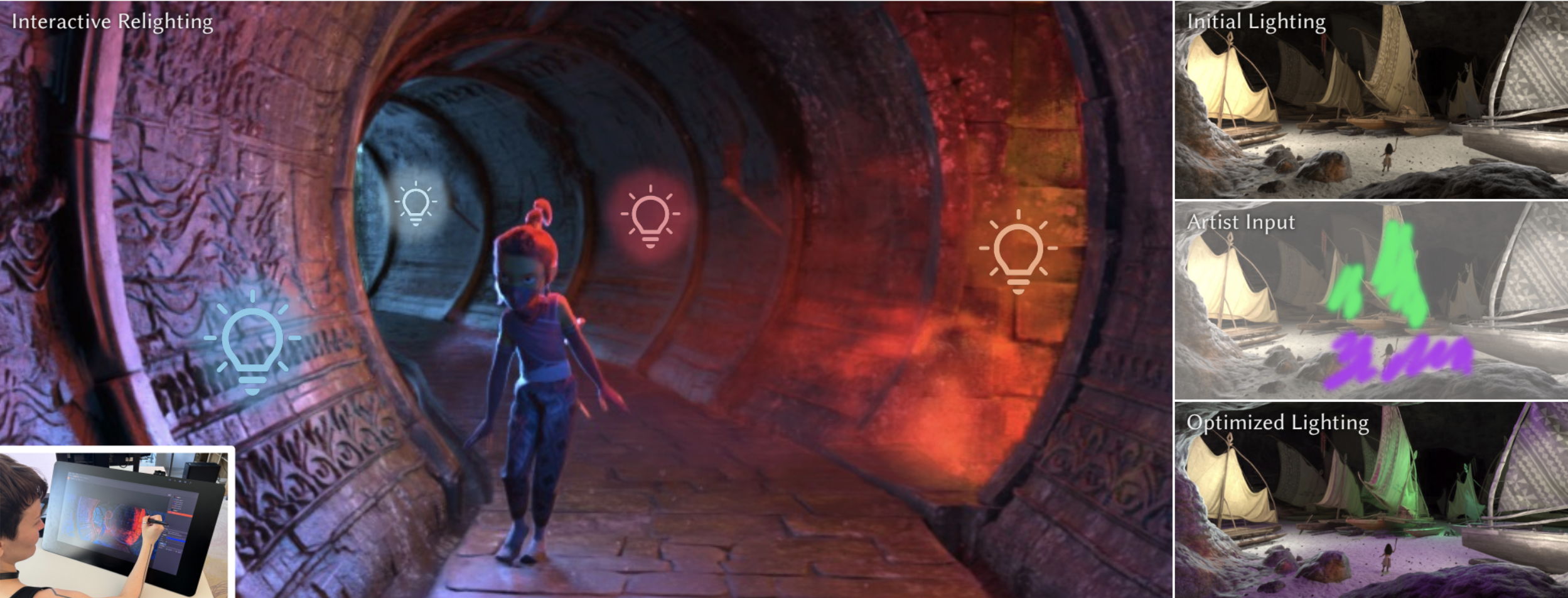
Disney Research researchers have developed Neural Render Proxies (NRP) technology, which allows for real-time lighting changes in static scenes at 30–60 Hz, turning the heavy rendering process into a flexible interactive tool.
What Happened
The Disney Research team presented the Neural Render Proxies (NRP) method, which separates the rendering process into a path sampling stage and a radiance computation stage. The technology uses a single pass to collect light transport data, after which a lightweight neural network is trained to provide interactive relighting with a fixed camera and materials.
Context
The traditional process of lighting setup in CGI animation requires heavy offline rendering (path tracing), where even minor lighting changes force artists to wait for hours of computation cycles to see a visual result.
Why It Matters for the Industry
The differentiability of the NRP method opens the way for gradient-based workflows, where lighting can be optimized based on visual edits or generative goals. This allows for the implementation of tools with instant feedback into large studio pipelines and potentially integrates neuro-graphics methods into industry standards and game engines.
Why It Matters for Users
Artists and technical specialists no longer need to wait for heavy rendering to complete to see lighting changes. This makes the visual content creation process more flexible, bringing the quality of photorealistic path tracing closer to the speed of game engines and allowing for the use of rapid previsualization tools.
What Is Not Yet Known / Limitations
At the current stage, the technology is a research project and requires verification for applicability in real production pipelines; enterprise architects point to its closed status, which is not yet ready for mass implementation in existing workflows.
Sources
Author
Look at AI, Editorial Team