
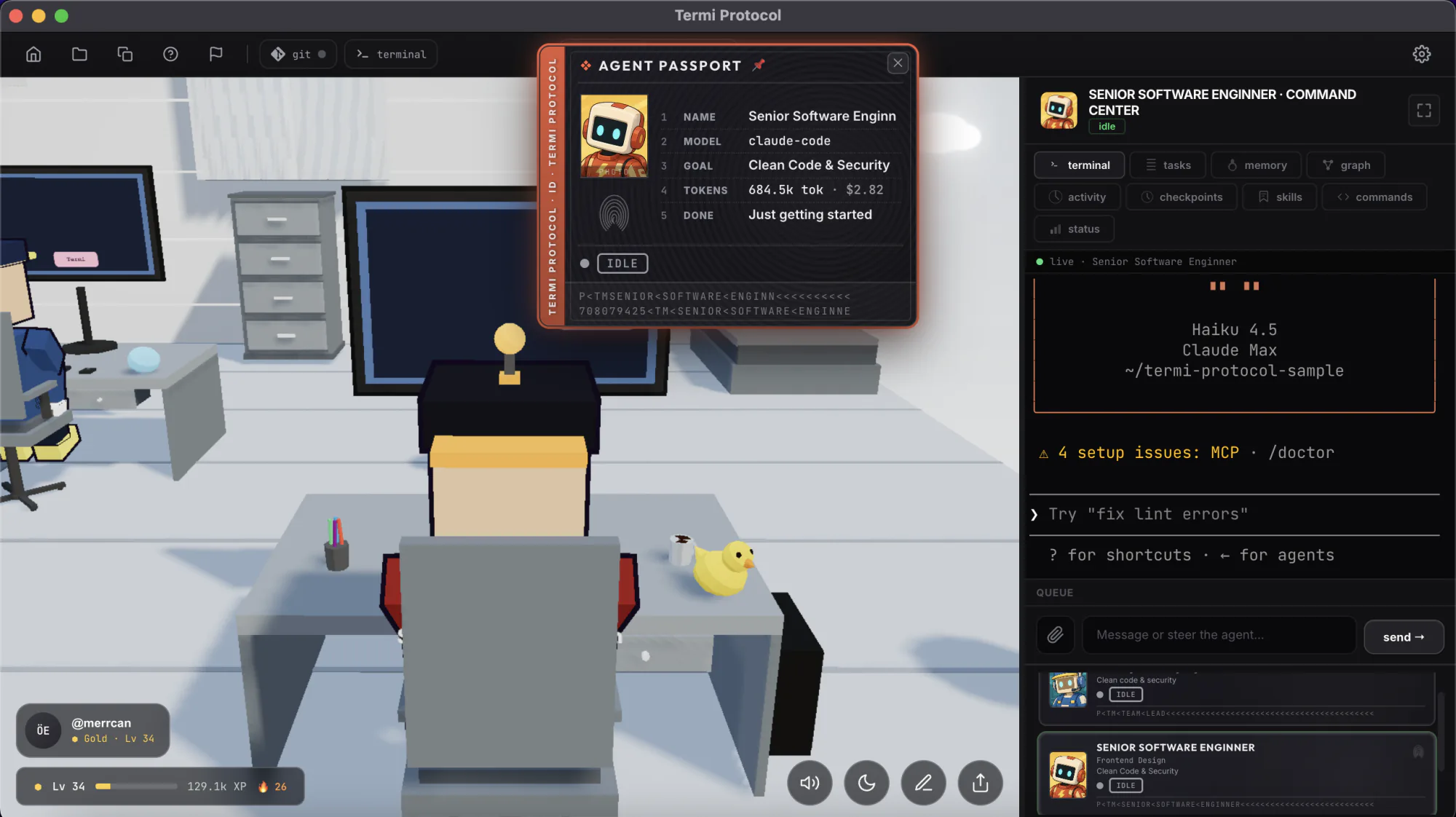
Termi Protocol is an innovative 3D interface that transforms text-based AI agent logs into an interactive "control room." The platform allows for the visual tracking of autonomous tool actions in a three-dimensional space, providing transparency and control over the development process.
What Happened
Termi Protocol has been developed—a new UX layer for managing existing AI agents such as Claude Code, Aider, Gemini CLI, and Ollama. Instead of monitoring an endless stream of text in the terminal, users gain access to an interactive 3D environment. The system includes workflow management tools: a checkpoint system, Kanban task boards, and real-time token usage cost monitoring.
Context
When working with autonomous coding agents, developers often face a "black box" problem, where a model's actions in the terminal are difficult to track and interpret in real time. The current interaction format is limited to text logs, which increases cognitive load and makes it difficult to control complex, multi-step action chains.
Why It Matters for the Industry
The project sets a new pattern for visual observability for terminal-based AI agents. This solution could become a standard for enterprise solutions and CI/CD processes where transparency of autonomous system actions is required. In the long term, this could lead to the standardization of "Spatial Agent Workflows," turning log viewing into full-scale visual task management.
Why It Matters for Users
Developers gain the ability to debug agent actions more effectively, easily roll back unsuccessful code changes, and visually monitor automation progress. The integration of API cost control tools helps avoid unforeseen expenses, while the transition from text mode to visual mode reduces the attentional load when managing multiple parallel sessions.
What Is Not Yet Known / Limitations
Technical and corporate specialists point to the need for additional assessment of system load when implementing such a visual layer, as well as the importance of the depth of integration with existing workflows.
Sources
Author
Look at AI, Editorial Staff