
Microsoft Research has introduced Vega, a zero-knowledge proof (ZKP) system optimized for mobile device operation. The technology allows for the verification of key facts from government documents, such as age or status, without revealing the documents themselves or personal data.

What Happened
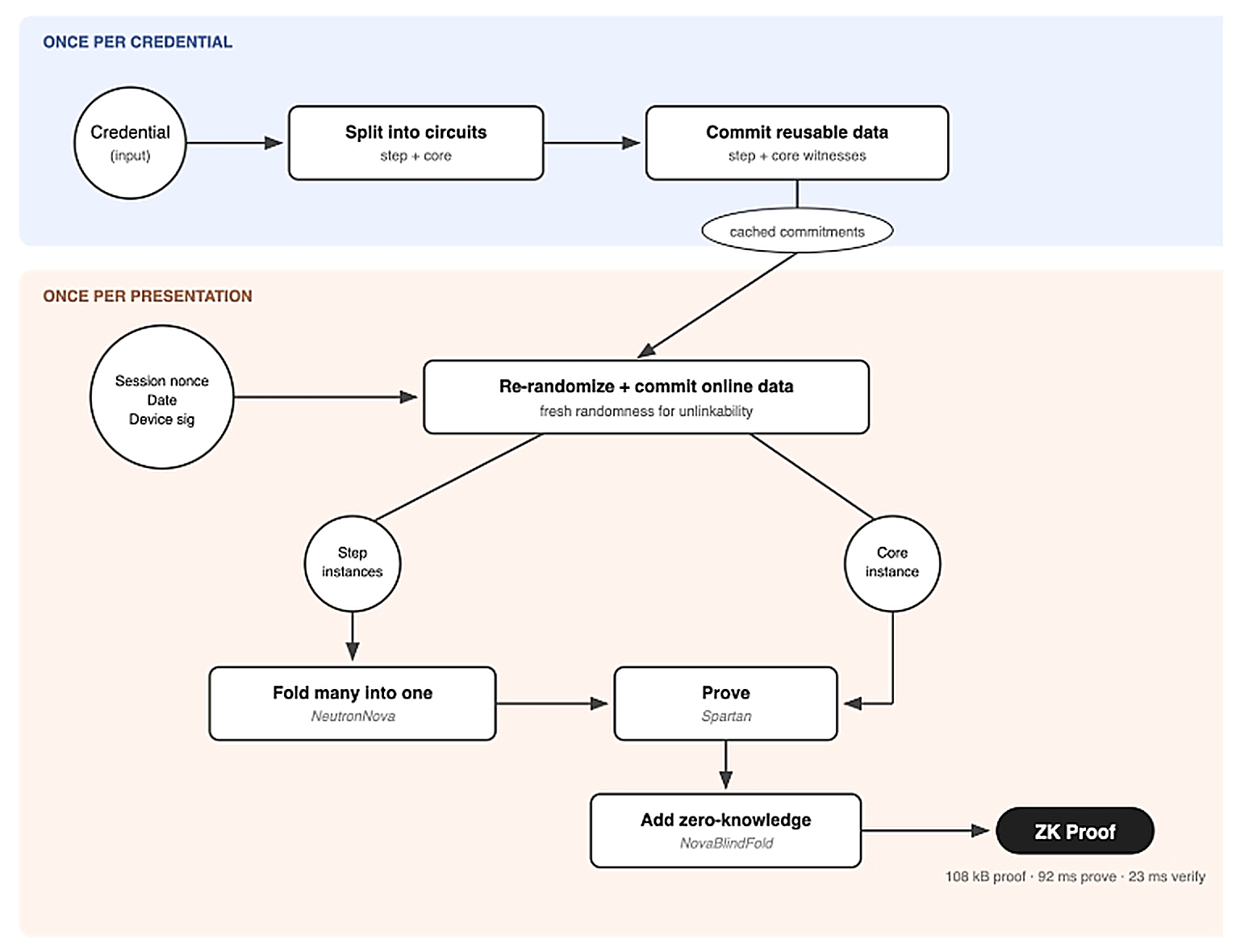
Developers from Microsoft Research presented Vega, a solution based on the Nova and NeutronNova cryptographic folding schemes. Thanks to optimizations in Rust and for mobile processors, the system provides extremely low latency: generating a proof for a driver's license takes approximately 92 ms.
Context
Traditional digital identity methods often require transferring full scans of documents, which creates a risk of sensitive information leaks and turns data repositories into "honeypots" for hackers. ZKP (Zero-Knowledge Proofs) allow this problem to be solved mathematically, but previously required too much computational power for mobile devices.
Why It Matters for the Industry
For the AI industry and service developers, Vega paves the way for creating secure AI agents capable of verifying a user's identity without direct access to their sensitive data. The use of Rust and optimization for Edge computing lowers the barriers to the mass adoption of privacy-first protocols in consumer applications and mobile SDKs.
Why It Matters for Users
For end users, this means a transition to a model where you don't need to upload your passport to every website for age verification. Your phone will be able to independently send a short cryptographic confirmation, keeping your personal data secret and ensuring fast, one-click verification.
Sources
Author
Look at AI, Editorial Team