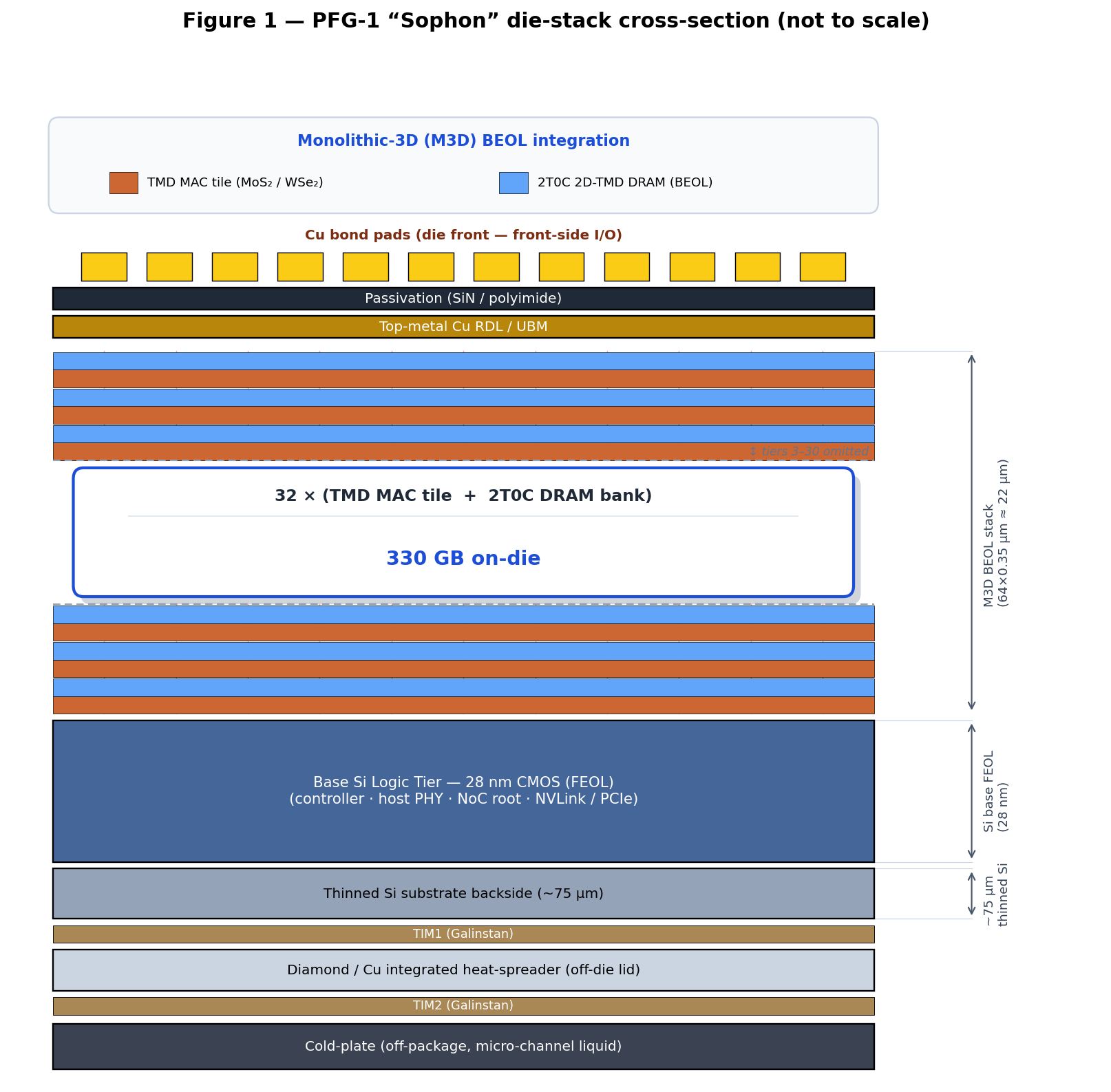
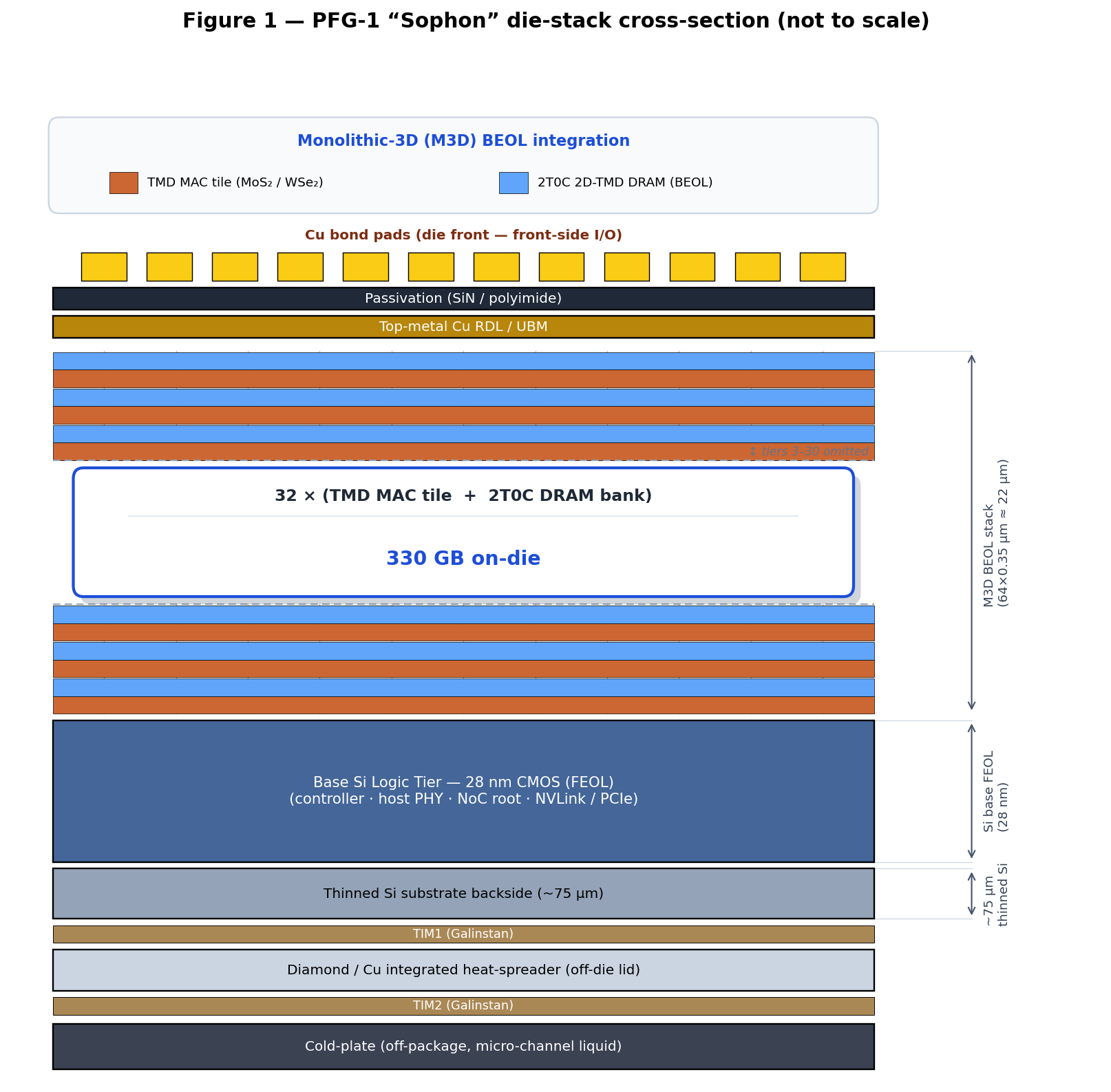
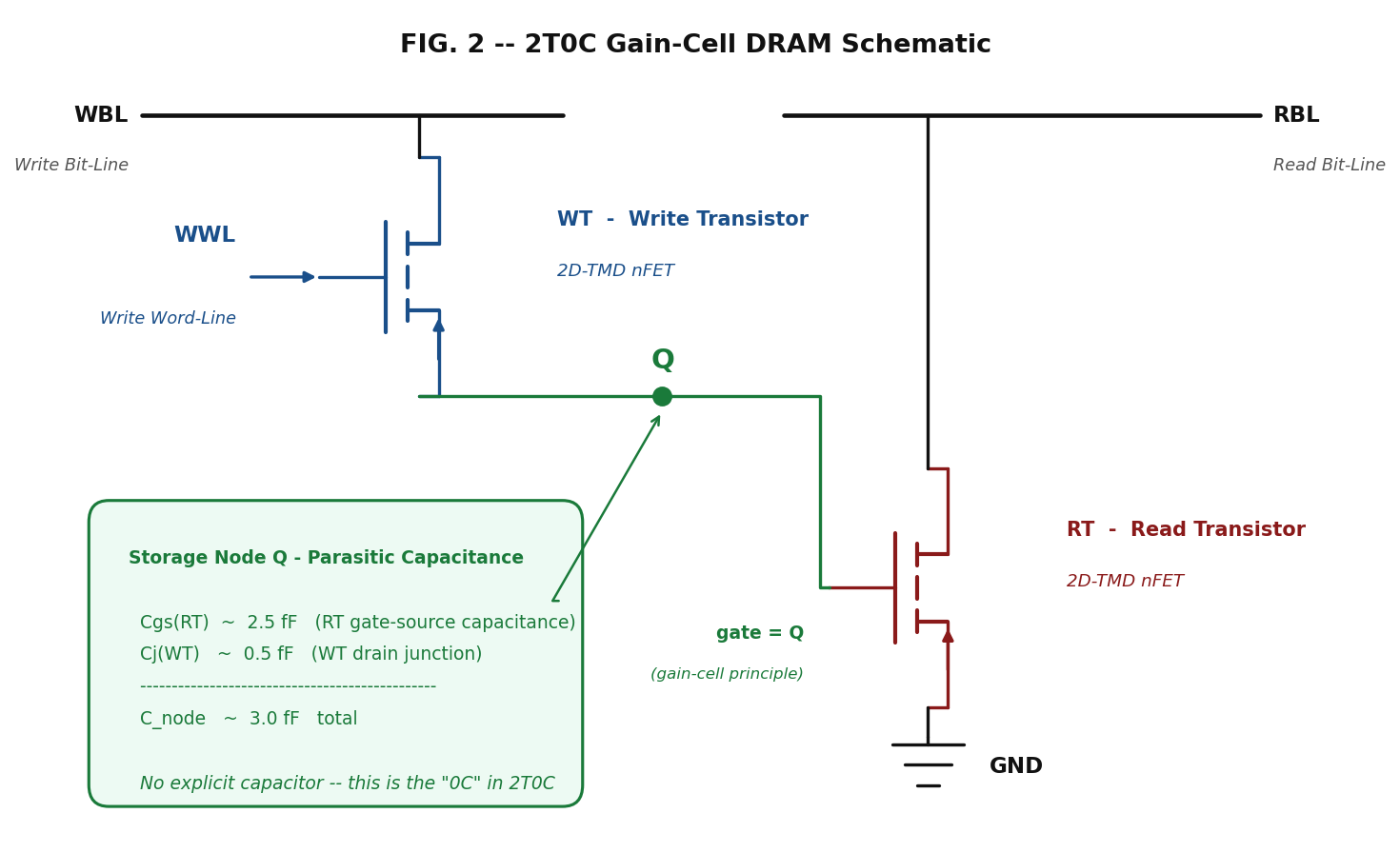
PhantaField has released a whitepaper for the Sophon PFG-1 chip ("Sophon")—an innovative monolithic 3D (M3D) accelerator designed for artificial intelligence tasks. By utilizing a 32-layer structure based on transition metal dichalcogenides (TMD), the architecture allows for the integration of 330 GB of 2T0C DRAM memory directly into the crystal structure, radically changing the approach to AI computing architecture.
What Happened
PhantaField announced the Sophon PFG-1 technology, which uses a monolithic 3D structure to combine computation and memory. Unlike traditional accelerators, the chip integrates 330 GB of 2T0C DRAM memory directly on-die, enabling weight bandwidth of up to 4200 TB/s and reducing inference energy consumption to as low as 25.8 mJ per token. Furthermore, the architecture completely eliminates the need for expensive external HBM (High Bandwidth Memory).
Context
Modern AI accelerators face the "memory wall" problem and a critical shortage of high-speed HBM, which limits scalability and increases system costs. PhantaField's solution shifts toward the Compute-In-Memory (CIM) paradigm, where computations occur directly within the memory structure, eliminating the bottleneck of data transfer between the processor and external memory.
Why It Matters for the Industry
For the industry, this represents a potential paradigm shift in AI infrastructure. Using a monolithic 3D design instead of an HBM hierarchy could reduce the Bill of Materials (BOM) cost by approximately 10 times compared to solutions like NVIDIA's Rubin. This paves the way for cheaper, more energy-efficient ASIC chips capable of competing with current GPUs in LLM training and inference tasks.
Why It Matters for Users
For end users and developers, this could mean significantly lower costs and faster deployment of ultra-large models (80B+ parameters). The technology creates a foundation for affordable local AI servers and high-performance edge devices, where low latency and energy efficiency are critical without being tied to expensive data centers.
Uncertainties / Limitations
At this stage, only a whitepaper has been presented, and the technology is in the conceptual design phase. Experts note that the project is currently more theoretical and is not available for industrial use; testing of real silicon samples (test chips) is required to confirm the claimed specifications.
Sources
Author
Look at AI, Editorial Staff