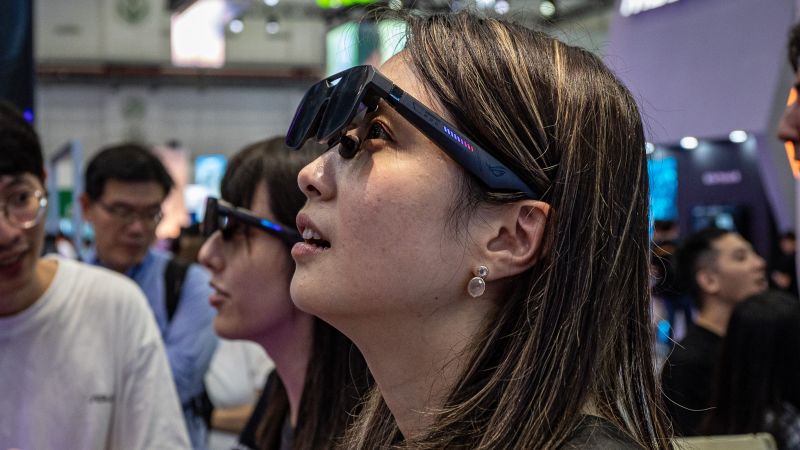
The use of wearable AI devices to bypass exam rules is becoming a serious problem, especially in East Asian countries. Devices capable of capturing visual questions and transmitting them to an LLM, subsequently displaying answers on the lenses, allow students to achieve outstanding results without actually mastering the material.

What Happened
Experiments have shown that smart glasses allow students to enter the top 5 of a group of more than 100 people by leveraging the capabilities of large language models. In response to this threat, China has already introduced mandatory inspections of glasses for entrance exam participants, while in Taiwan, cases of detecting such devices using thermal imagers—which capture lens radiation—have been recorded.
Context
The mass proliferation of wearable AI devices, such as Meta Ray-Bans (sales of which have exceeded 7 million pairs), is turning physical exam spaces into zones of uncontrolled model inference. The technological level of these gadgets allows them to remain unnoticed by traditional monitoring methods, making standard classroom conduct rules ineffective.
Why It Matters for the Industry
For the wearable technology and AI industry, this signifies a growing demand for specialized proctoring solutions and knowledge verification methods. An "arms race" is emerging between smart gadget developers and creators of detection systems, including thermal scanners and algorithms for detecting atypical behavior.
Why It Matters for Users
For students and educational institutions, this is a signal for a fundamental shift in teaching methodology: the focus must shift from testing memory and fact reproduction to testing critical thinking skills and problem-solving abilities that are difficult to automate in real time.
What Is Not Yet Known / Limitations
There is an ongoing debate regarding the effectiveness of countermeasures: experts are divided on whether physical inspections and thermal scanning are reliable defenses or merely reactive, non-scalable methods of fighting technological progress.
Sources
Author
Look at AI, Editorial Team