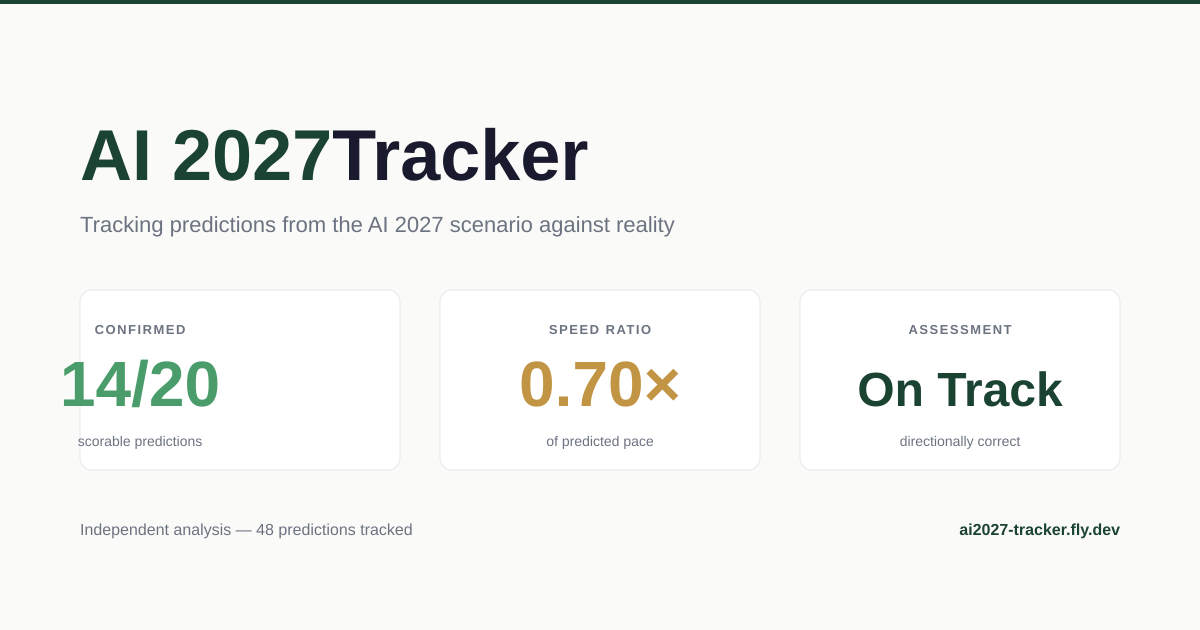
The AI 2027 Tracker project has identified a significant divergence between the actual development of artificial intelligence technologies and the optimistic forecasts for 2027. As of May 2026, the industry's pace stands at just 0.7x of the expected rate, demonstrating qualitative leaps in certain areas alongside quantitative lags in others.
What Happened
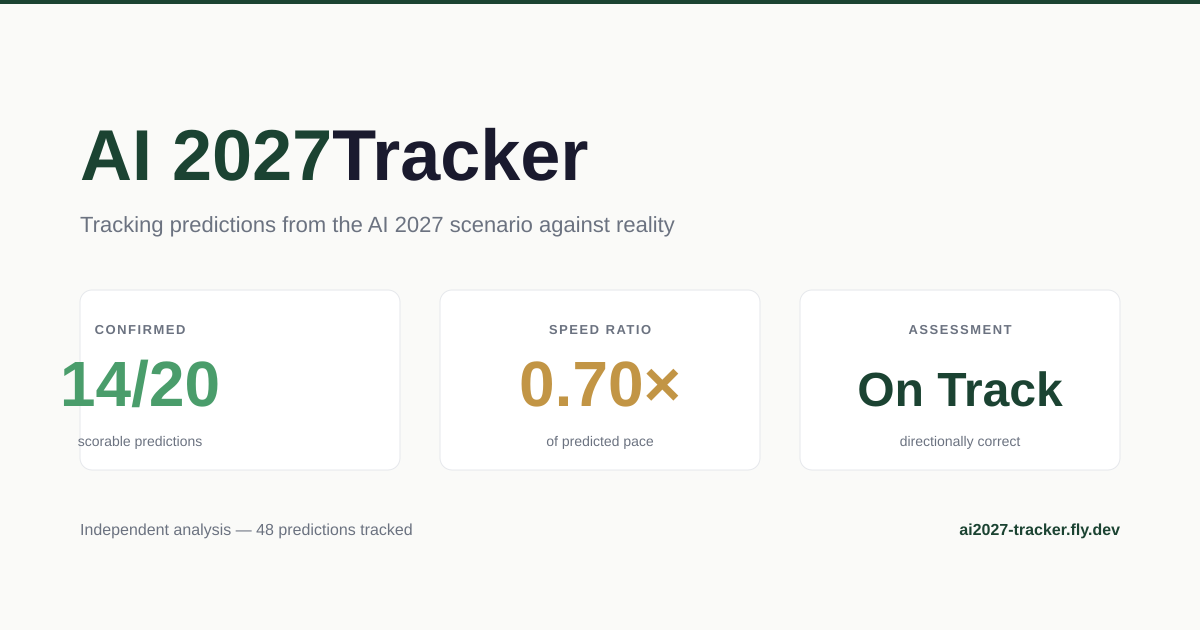
According to data from the AI 2027 Tracker project, the current pace of AI development is recorded at 0.7x of the projected rate. A divergence is observed: while agentic systems and coding capabilities show rapid growth (confirmed by success in the OSWorld benchmark at a level of 65%), quantitative metrics—such as compute scales and the market capitalization of leading companies—are lagging behind expected trajectories. Specifically, the $3T valuation of major AI companies and stock market growth rates do not align with current technological progress.
Context
This analysis is conducted by comparing actual progress against expert forecasts for 2027 to determine how closely the industry is moving toward predicted AI development milestones.
Why It Matters for the Industry
For the industry, this implies a need to revise short-term expectations regarding compute scaling and to adjust company valuation models. The observed gap creates a window of opportunity for developers focusing on the efficiency of agentic workflows rather than simply increasing raw compute power. Investors should expect a slower return on investment (ROI) in infrastructure.
Why It Matters for Users
For readers and users, this provides an opportunity to more realistically assess technological trends and distinguish real breakthroughs from market hype. Instead of expecting the 'instant' achievement of AGI, the focus is shifting toward the practical application of agents in specific tasks, such as coding automation and operating system (OS) interaction.
What Remains Unknown / Limitations
There is a difference in expert emphasis, ranging from discussions on infrastructural risks to analyses of market opportunities for solo developers.
Sources
Author
Look at AI, Editorial Team