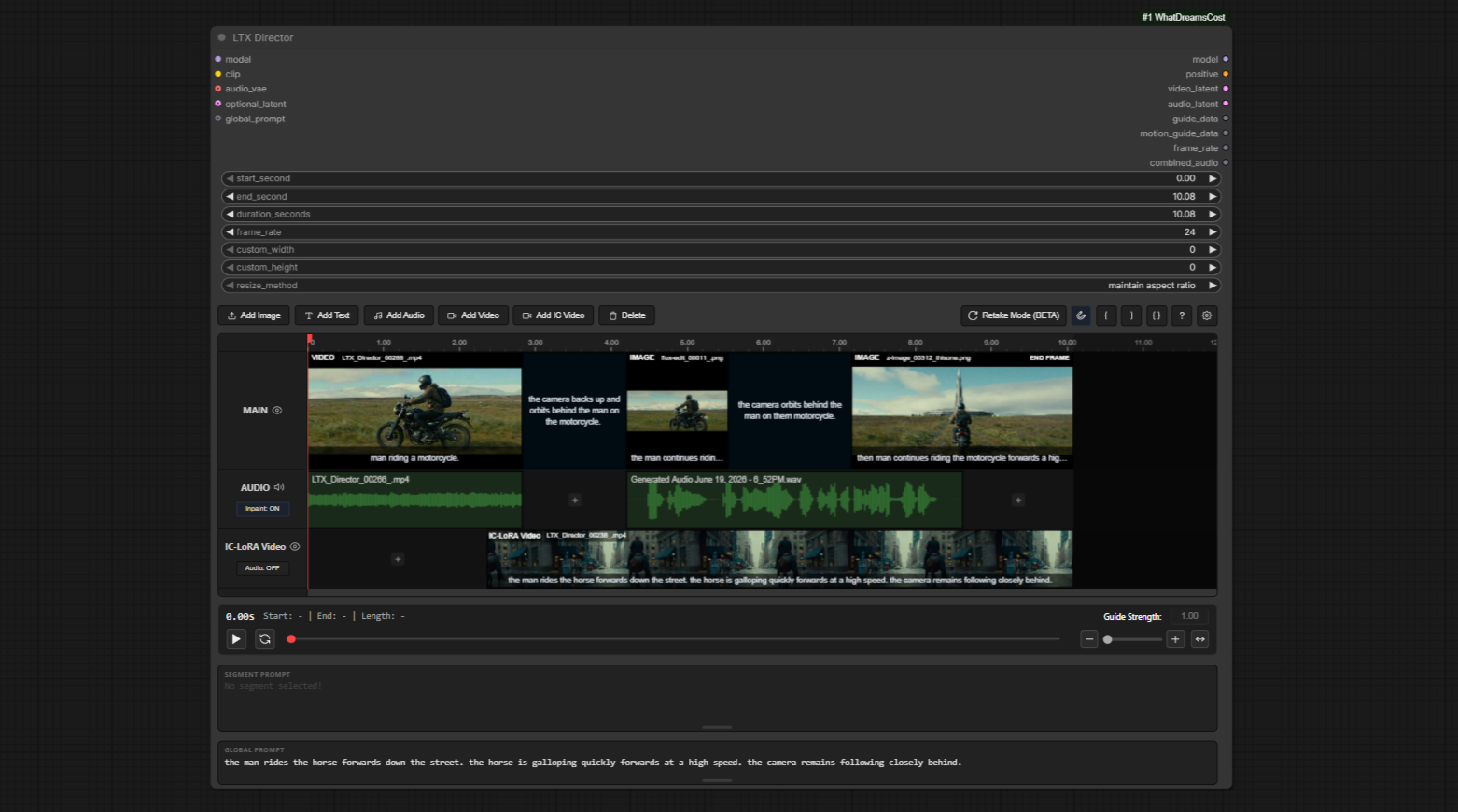
A major update has been released for LTX Director 2.0—a set of custom nodes for ComfyUI designed for advanced AI-driven video editing. Users can now edit video directly within the node using prompts, keyframes, and audio, as well as apply IC-LoRA to enhance generations.
What Happened
The LTX Director 2.0 update includes audio inpainting features, allowing users to mix and extend sound, as well as a beta Retake Mode for targeted regeneration of specific video segments. The toolkit is further enhanced with IC-LoRA capabilities to improve visual quality and the integration of timeline control elements directly into ComfyUI workflows.
Context
Traditionally, using ComfyUI for video creation often felt like a "roll the dice" process, where control over the final result was limited. The development of editing tools—such as trimming, stitching, and timeline management via JSON setting saves—aims to create the reproducible and standardized pipelines necessary for professional work.
Why It Matters for the Industry
These tools transform ComfyUI from a simple generation system into a full-fledged environment for AI-driven video post-production. This brings the workflow closer to professional non-linear editors (NLEs) and creates a foundation for the future integration of autonomous agents capable of performing the full cycle of video content processing.
Why It Matters for Users
Users gain a powerful tool for control, allowing them to not just create clips "from scratch," but to precisely fix, expand, and voice them within a single interface. This significantly lowers the barrier to entry for creating high-quality video content and allows small studios and enthusiasts to effectively utilize local GPU resources for professional production.
Uncertainties / Limitations
There are differing views on the technology's readiness: while it is a powerful tool for solo developers, enterprise architects point to unresolved issues regarding data management and the complexities of integrating such tools into large-scale corporate pipelines.
Sources
Author
Look at AI, Editorial Team