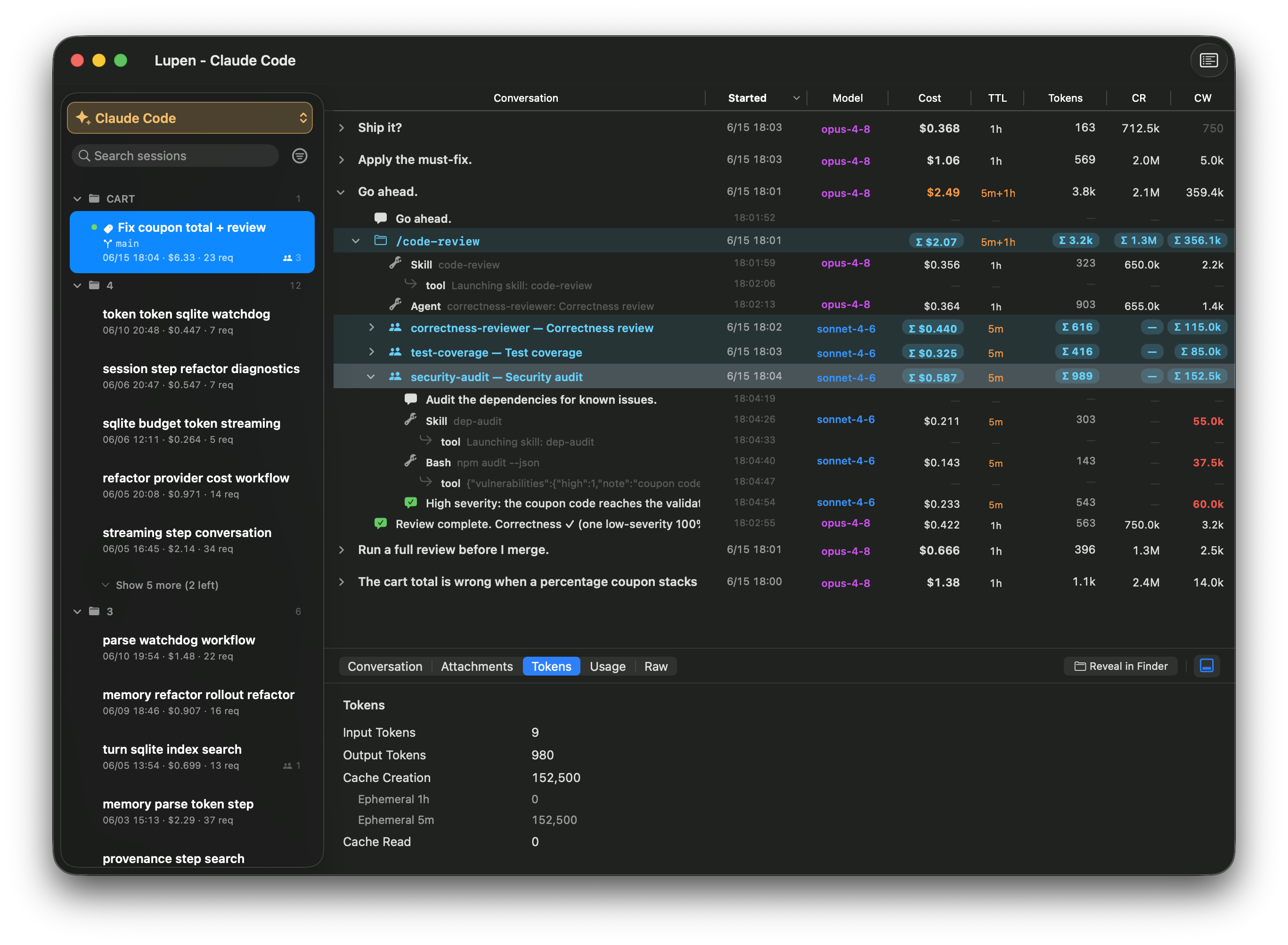
The macOS application Lupen has been released, designed for detailed cost auditing when using AI tools like Claude Code and Codex. The program allows users to verify bills by analyzing local session logs and matching token data with official provider price lists.

What Happened
A developer has introduced Lupen—a specialized macOS application that provides transparency into the costs of using AI agents. The tool analyzes local log files and provides cost breakdowns at the level of each turn, tool used, and individual sub-agent. This allows users to pinpoint exactly which operations within a session led to increased costs.
Context
With the rise of agentic workflows, a single user query can trigger a cascade of hidden sub-queries and sub-agent calls. This creates a "black box" problem in billing, where it becomes difficult to understand the actual cost of executing a specific task. The transition to such complex model usage cycles exponentially complicates the control of operational expenses.
Why It Matters for the Industry
The emergence of Lupen signals the formation of a new infrastructure layer for FinOps in the field of AI agents. This creates a need for observability and cost management tools for autonomous systems. In the long term, standardization of logging approaches and the integration of cost control mechanisms directly into IDEs and agent orchestrators are expected to become mandatory requirements for runtime environments.
Why It Matters for Users
For developers and teams, Lupen makes it possible to avoid unexpected large bills from Anthropic or OpenAI. The tool enables the quick detection of "infinite loops" or inefficient sub-agents that "bloat" the budget. This reduces uncertainty when planning expenses for LLM agent usage and allows for precise verification of provider invoices.
Sources
Author
Look at AI, Editorial Team