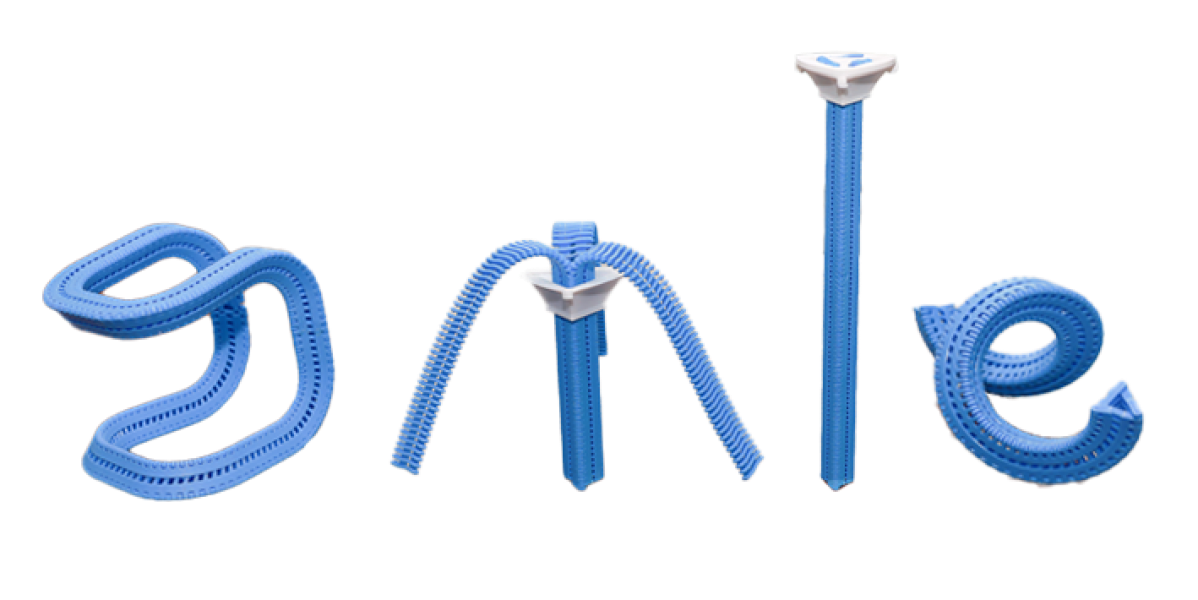
Researchers from MIT CSAIL, led by Stephanie Müller, have developed a system of adaptive 3D-printed fasteners capable of instantly changing their shape. This technology allows flexible plastic strips to be transformed into rigid three-dimensional structures—straight, curved, or spiral—using specialized software and a unique mechanism.

What Happened
The MIT CSAIL team presented a working prototype of a mechanism that utilizes 3D printing and software control to alter the physical properties of a material. The system enables the creation of complex geometric shapes without the use of traditional motors or hinges. Practical examples demonstrated include setting up a tent in just 80 seconds and creating medical casts that can be adjusted as swelling changes.
Context
This development represents a significant advancement in the field of programmable matter, moving the concept of adaptive structures from a theoretical plane to functional mechanical nodes. Unlike classical mechanics, where motion is controlled through motors and complex joints, here the physical shape of the object is controlled directly through the integration of software with the physical fastener mechanism.
Why It Matters for the Industry
For the additive manufacturing and materials science industries, this is a breakthrough that allows for the creation of complex mechanical assemblies without traditional engines or intricate hinges. The technology opens possibilities for developing products with programmable mechanics, where the physical properties of the material serve as the primary control tool.
Why It Matters for Users
In the consumer sector, this technology could radically change the production of everyday items: from high-tech camping gear that assembles almost instantly to personalized medical devices, such as adjustable orthotics and casts that adapt to a patient's condition.
What Remains Unknown / Limitations
At the current stage, the development is in the academic research and Proof of Concept phase within MIT CSAIL laboratories. There is a technical gap between the laboratory prototype and the technology being production-ready for large-scale industrial implementation.
Sources
Author
Look at AI, Editorial Staff