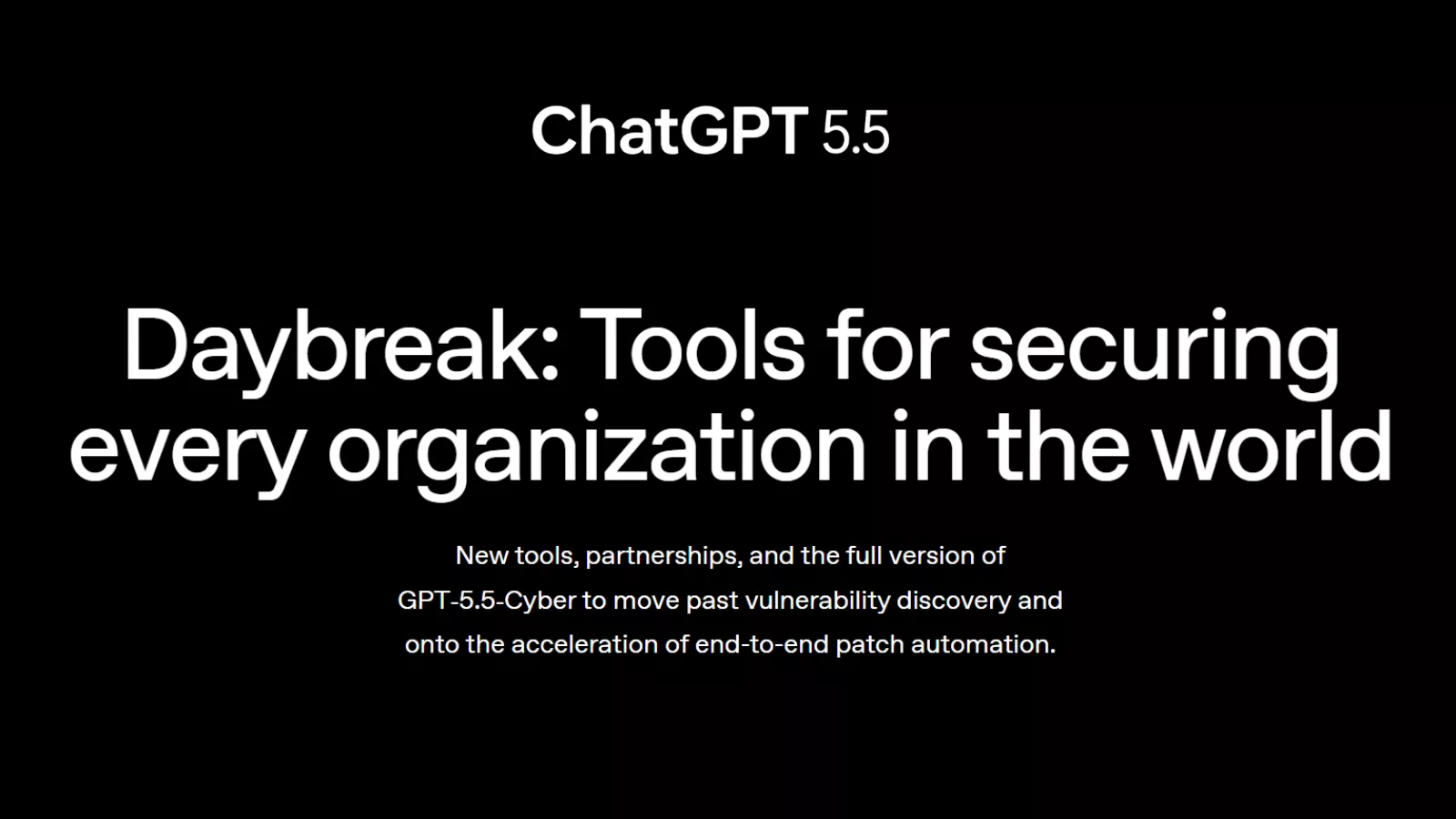
OpenAI has released the full version of GPT-5.5-Cyber—a specialized model for cybersecurity developed under the Daybreak initiative. The model set a new record on the CyberGym benchmark, achieving a score of 85.6%, surpassing both Mythos 5 (83.8%) and the standard GPT-5.5 (81.8%).


What Happened
As part of the Daybreak program, OpenAI introduced GPT-5.5-Cyber, designed for automated vulnerability discovery and patch generation. The model demonstrated superiority in the specialized CyberGym test. Access to the tool is being provided through the Trusted Access for Cyber program to verified partners in the EU, Australia, Canada, Japan, and South Korea.
Context
The release of this specialized model marks a transition from using AI as a simple coding assistant to utilizing it as an autonomous agent within critical security infrastructure. The toolkit supports CodeQL standards and SARIF format export, allowing for seamless integration into existing DevSecOps processes.
Why It Matters for the Industry
For the industry, this represents a qualitative leap in DevSecOps automation: vulnerability detection and patch creation can now occur at machine speed. Integration with CodeQL makes the model a full-fledged component of enterprise development pipelines, increasing the efficiency of specialized cyber defense teams.
Why It Matters for Users
For specialists and companies, this is a signal that AI is becoming a powerful tool for software protection. Specialized models like GPT-5.5-Cyber will define security standards in the coming years, turning automated vulnerability scanning into a standard stage of CI/CD.
What Is Not Yet Known / Limitations
Access to the model is restricted by the Trusted Access for Cyber program, which creates a gap between the capabilities of elite defenders and the broader DevOps community or startups.
Sources
Author
Look at AI, Editorial Team