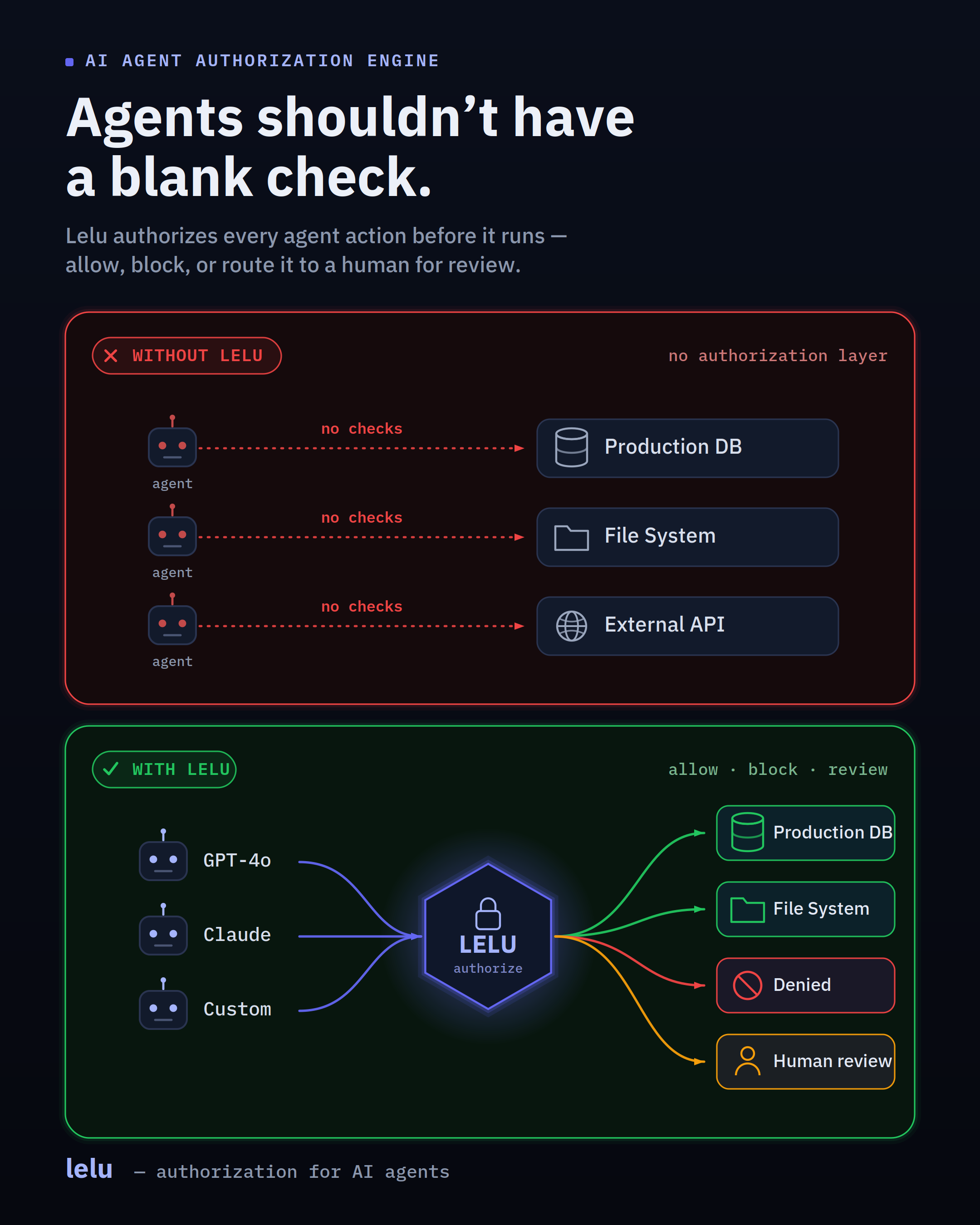
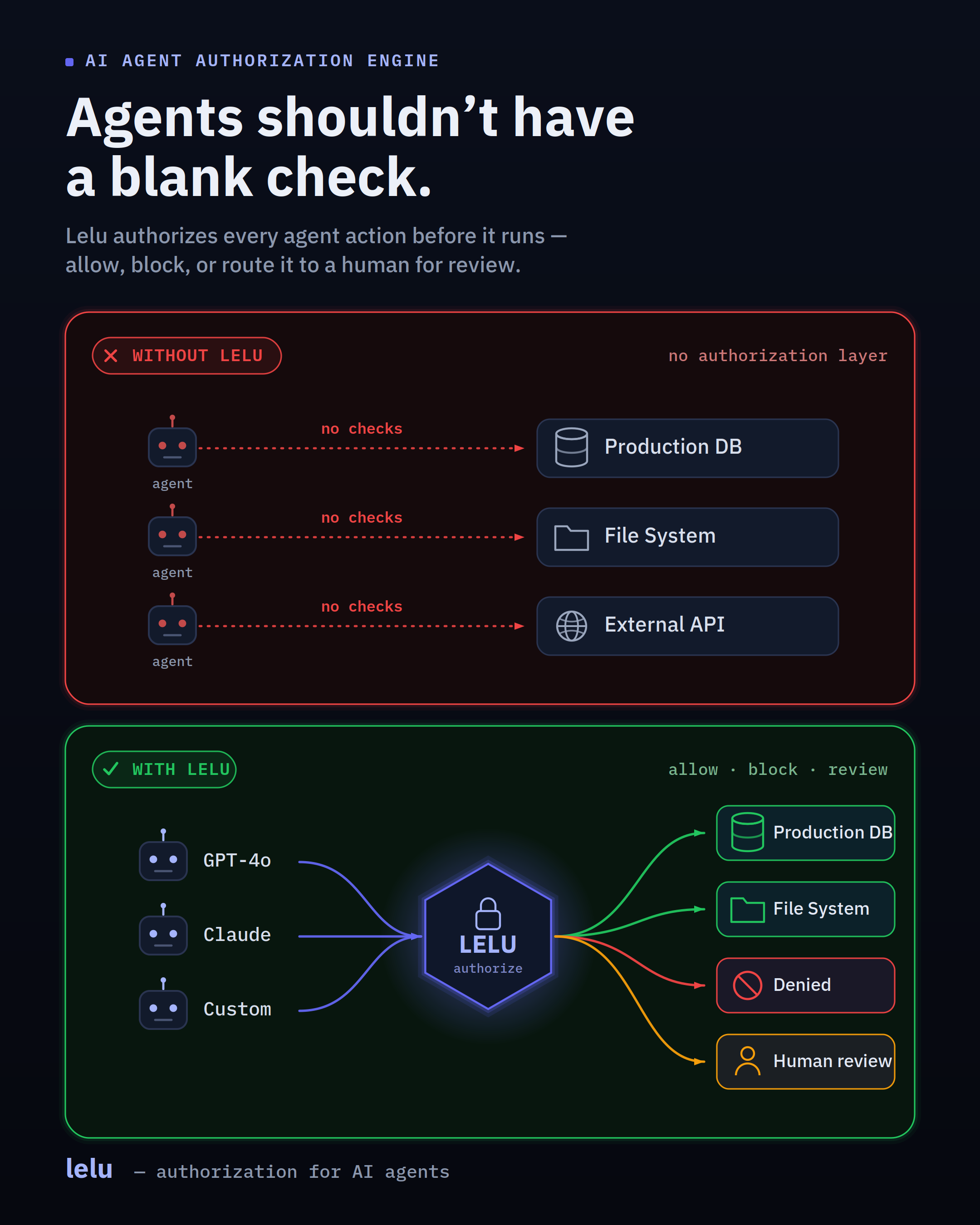
Lelu has been introduced—a specialized open-source tool designed to ensure the security of autonomous AI agents. The system protects them from prompt injection attacks and other manipulations in real time using a multi-layered action verification pipeline.
What Happened
Developers have released Lelu, an open-source authorization engine for AI agents. The system utilizes a multi-layered pipeline that includes injection filtering, a confidence gate based on LLM token probabilities, and comprehensive risk assessment. Upon detecting suspicious behavior, Lelu can automatically block the action, redirect it to a safe sandbox, or initiate a human-in-the-loop verification request.
Context
Traditional Identity and Access Management (IAM) systems are focused on static permission checks and are unable to recognize situations where an authorized agent falls victim to context manipulation. Lelu fills this gap by moving from simple permission management to dynamic intent analysis and the probabilistic characteristics of LLM generation at the token level.
Why It Matters for the Industry
For the industry, this means the possibility of more secure deployment of autonomous agents into critical business processes. Lelu creates the necessary security layer, allowing development focus to shift from merely ensuring agent functionality to creating controlled and protected systems capable of safely interacting with external APIs and corporate data.
Why It Matters for Users
Developers gain a ready-made tool for implementing "fuses" during the system design stage. This lowers the barrier to entry for creating agentic solutions in sensitive sectors such as finance, medicine, and data management, allowing for the testing and deployment of agents in production environments with minimized risk of uncontrolled damage from errors or targeted attacks.
What Is Not Yet Known / Limitations
Additional verification is required regarding the system's impact on latency and the overall operational complexity of the infrastructure.
Sources
Author
Look at AI, Editorial Team