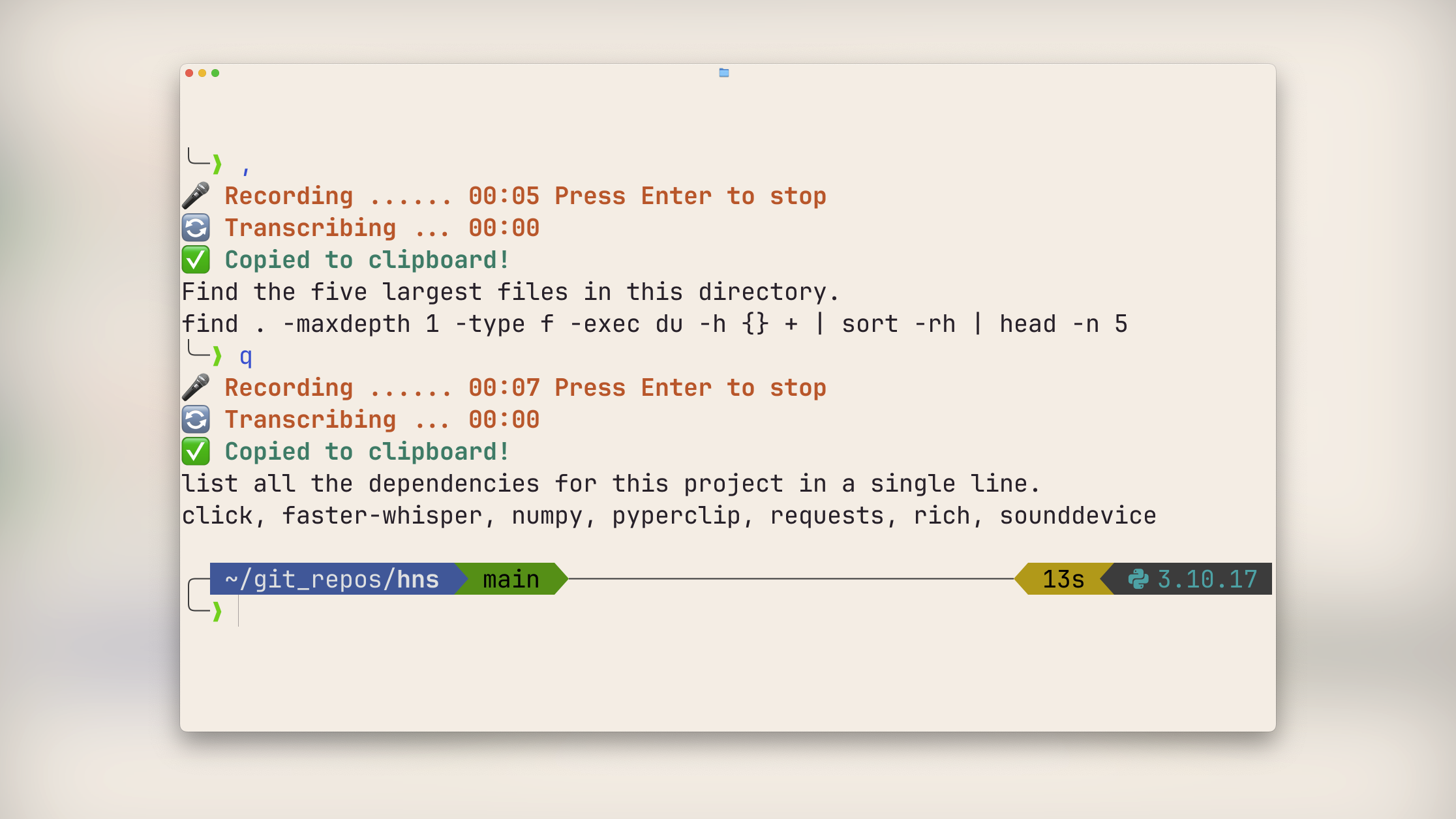
A developer has introduced a new workflow that enables terminal control through voice, utilizing a combination of local speech recognition and the Pi coding agent to ensure complete data privacy.
What Happened
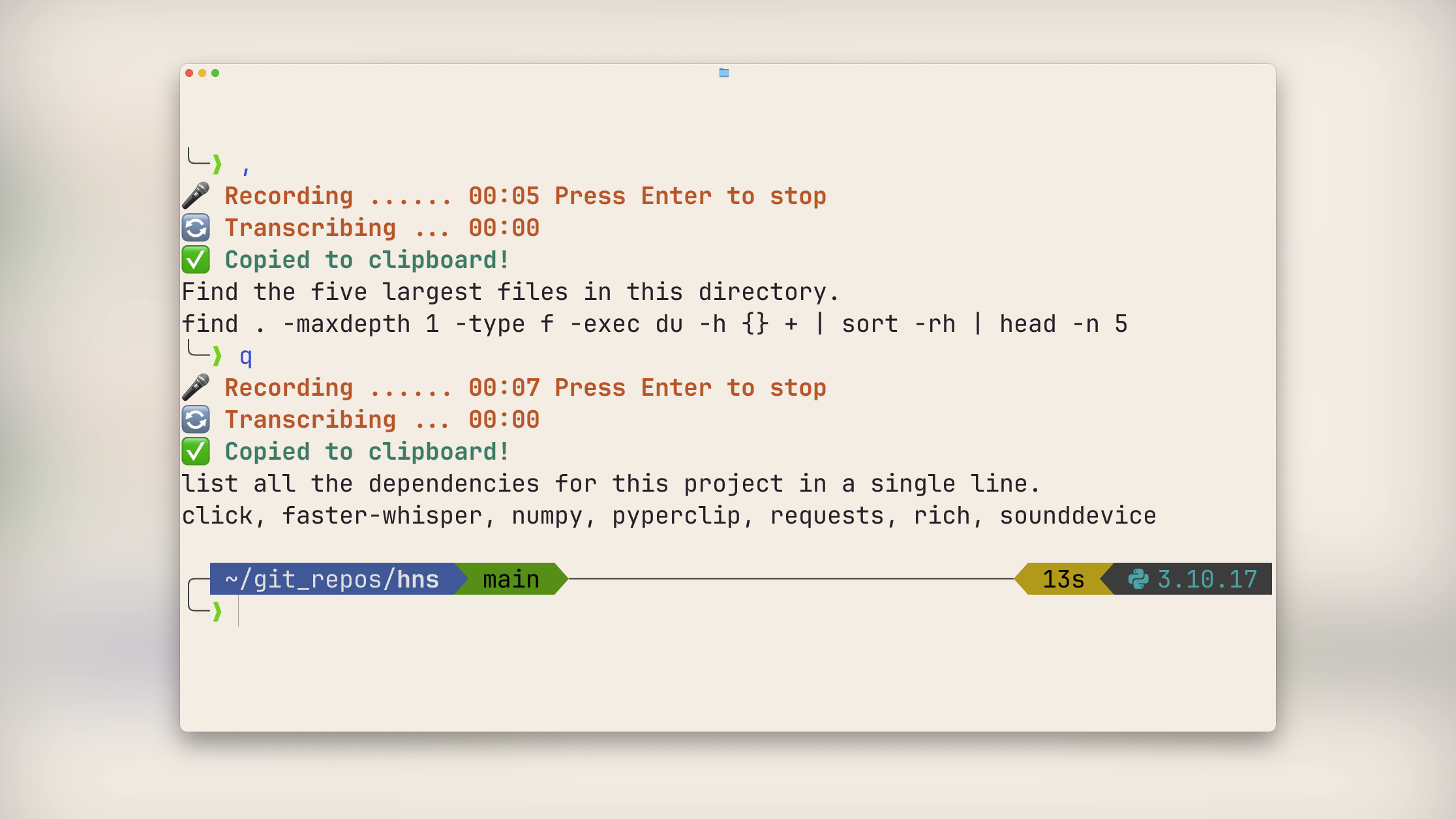
A CLI tool named hns has been created based on the faster-whisper-base model. It implements two main functions: generating shell commands via a comma (',') and the ability to ask questions about local files using the 'q' command. The entire processing cycle, including speech transcription and LLM operations, is performed entirely on the local machine.
Context
The solution is based on the use of open-source models, such as faster-whisper-base for Speech-to-Text (STT) and local language models for command execution. This allows for the creation of a closed-loop system control, preventing the transmission of sensitive information to cloud services.
Why It Matters for the Industry
The project demonstrates the potential of using local open-source models to replace cloud interfaces in niche automation tasks. This paves the way for 'voice-first' workflows in development and system administration environments, reducing latency and increasing data security through an edge-oriented approach.
Why It Matters for Users
Developers and system administrators gain the ability to manage the terminal using natural language without the need for typing, while maintaining full control over their file contents and avoiding sending them to third-party APIs.
What Is Not Yet Known / Limitations
At this stage, the project is more of a proof-of-concept, as quantitative data regarding computational load and system latency is currently unavailable.
Sources
Author
Look at AI, Editorial Staff