The mass adoption of agentic development tools, such as Claude Code and Cursor, creates serious legal uncertainties regarding copyright and license purity. The lack of clear mechanisms to verify human involvement may deprive companies of intellectual property protection and lead to the unintentional use of code protected by copyleft licenses.
What Happened
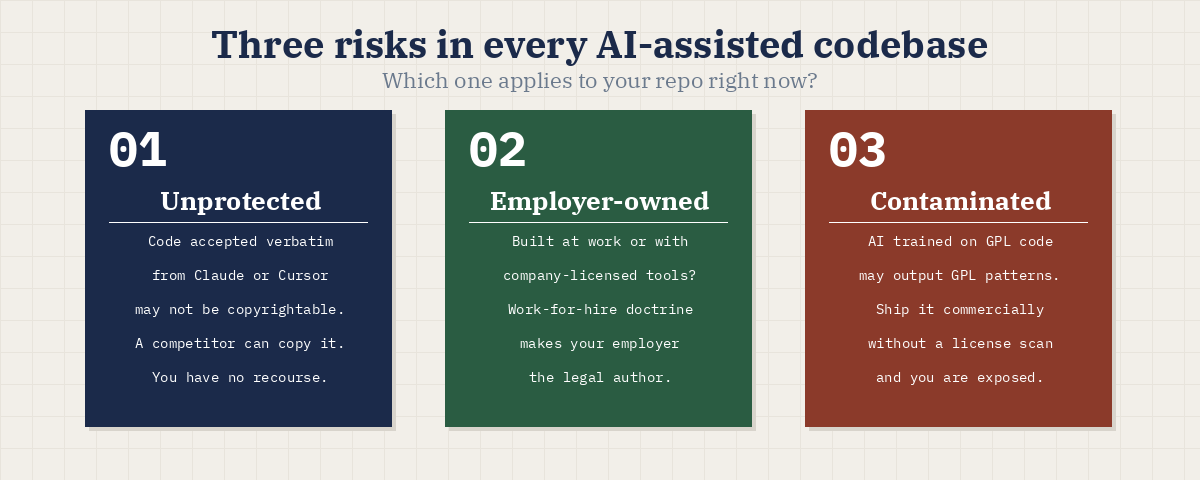
Using AI agents to write code generates three key risks: the inability to obtain copyright for a product without proven Meaningful Human Authorship, the risk of automatic appropriation of code rights by an employer, and potential project contamination with GPL-type licenses due to the verbatim copying of open-source software fragments.
Context
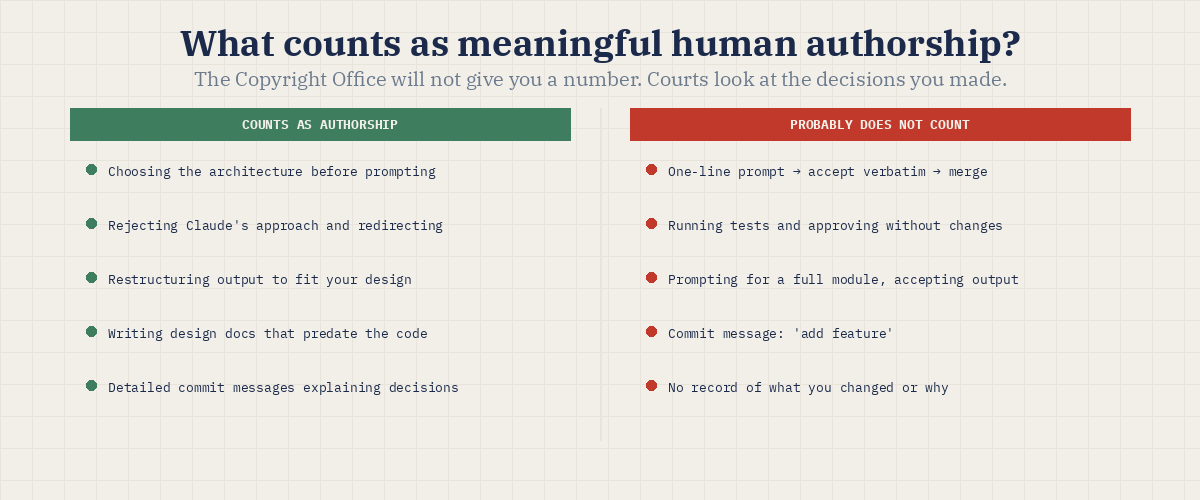
According to current legal precedents, software code generated by AI and accepted by a developer without substantial modification may not be recognized as a subject of copyright. This creates a gap between the speed of development using agents and the legal readiness of companies to protect their assets.
Why It Matters for the Industry
For the industry, this means the need to implement new control standards. Companies require the integration of license scanning tools (e.g., FOSSA or Snyk) into CI/CD pipelines and mandatory documentation of architectural decisions to verify human contribution to the code creation process.
Why It Matters for Users
Developers using AI for personal projects should work on their own devices and accounts to avoid employer claims on intellectual property. It is also critically important to thoroughly check generated code for fragments under GPL licenses.
What Is Not Yet Known / Limitations
At the moment, there are no definitive legal precedents that clearly delineate the rights to generated versus authored code in the era of autonomous agents.
Sources
Author
Look at AI, Editorial Team