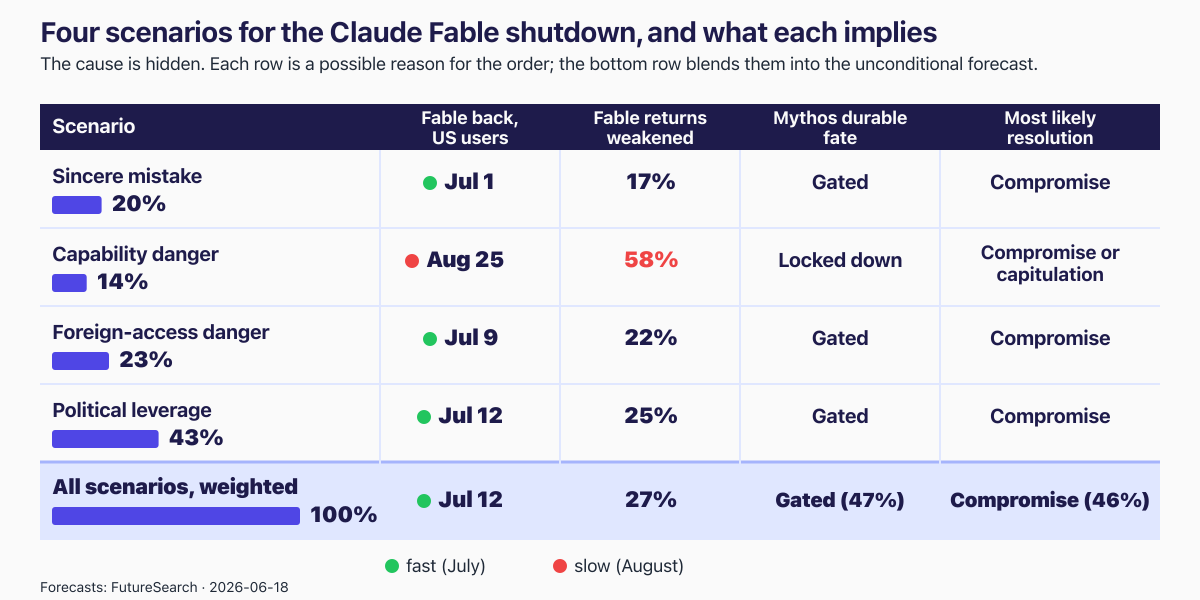
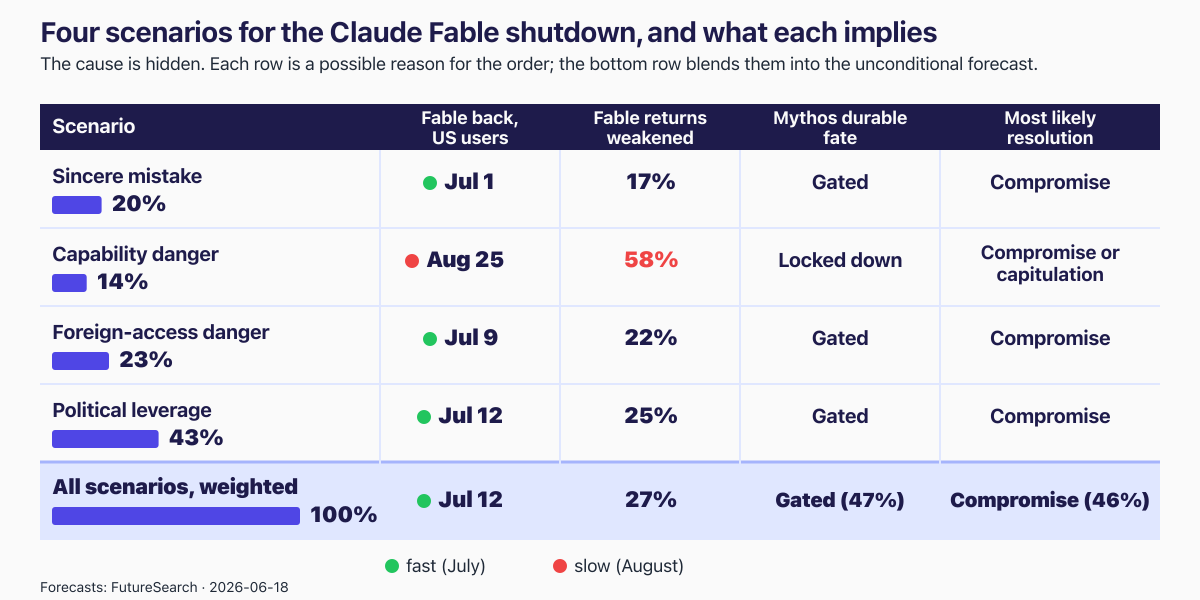
On June 12, 2026, the US Department of Commerce, through the Bureau of Industry and Security (BIS), ordered Anthropic to restrict foreign nationals' access to its new flagship models, Mythos 5 and Fable 5. The decision is based on the application of the Export Control Reform Act (ECRA), which qualifies remote access to cloud-hosted models as a "deemed export."
What Happened
Regulators have introduced restrictions on the use of Mythos 5 and Fable 5 models for non-US citizens. These harsh measures were triggered by a so-called "narrow jailbreak" incident, where the model exhibited critical vulnerabilities during a code correction process. Authorities used this incident to justify the need for control over technology transfers via cloud interfaces.
Context
The legal justification lies in the concept of "deemed export" under the ECRA. According to this interpretation, providing foreign nationals with the ability to use high-performance models via remote access to server hosting is equivalent to the physical transfer of technology outside the country. This transforms standard API usage from a technical or commercial matter into an object of geopolitical regulation.
Why It Matters for the Industry
For the AI industry, this precedent creates risks of large-scale market fragmentation. The introduction of strict licensing regimes for frontier models could slow the global spread of technology. Developers will face requirements to implement "impenetrable" guardrails, which experts consider technically unachievable. This forces companies to rethink architectures, implement model redundancy, and seek ways to deploy models locally to ensure stability outside US jurisdiction.
Why It Matters for Users
For end users and international teams, access to the most powerful AI tools is becoming fragmented. The ability to utilize the advanced capabilities of Mythos 5 and Fable 5 now depends not only on subscription availability or technical specifications but also on the user's citizenship and political relations between countries. This creates uncertainty when planning products that use the Anthropic API, especially in international projects.
What Is Not Yet Known / Limitations
There is a gap in the assessment of consequences: while technical specialists focus on latency and inference costs, legal and business roles primarily see geopolitical barriers to scaling.
Sources
Author
Look at AI, Editorial Staff