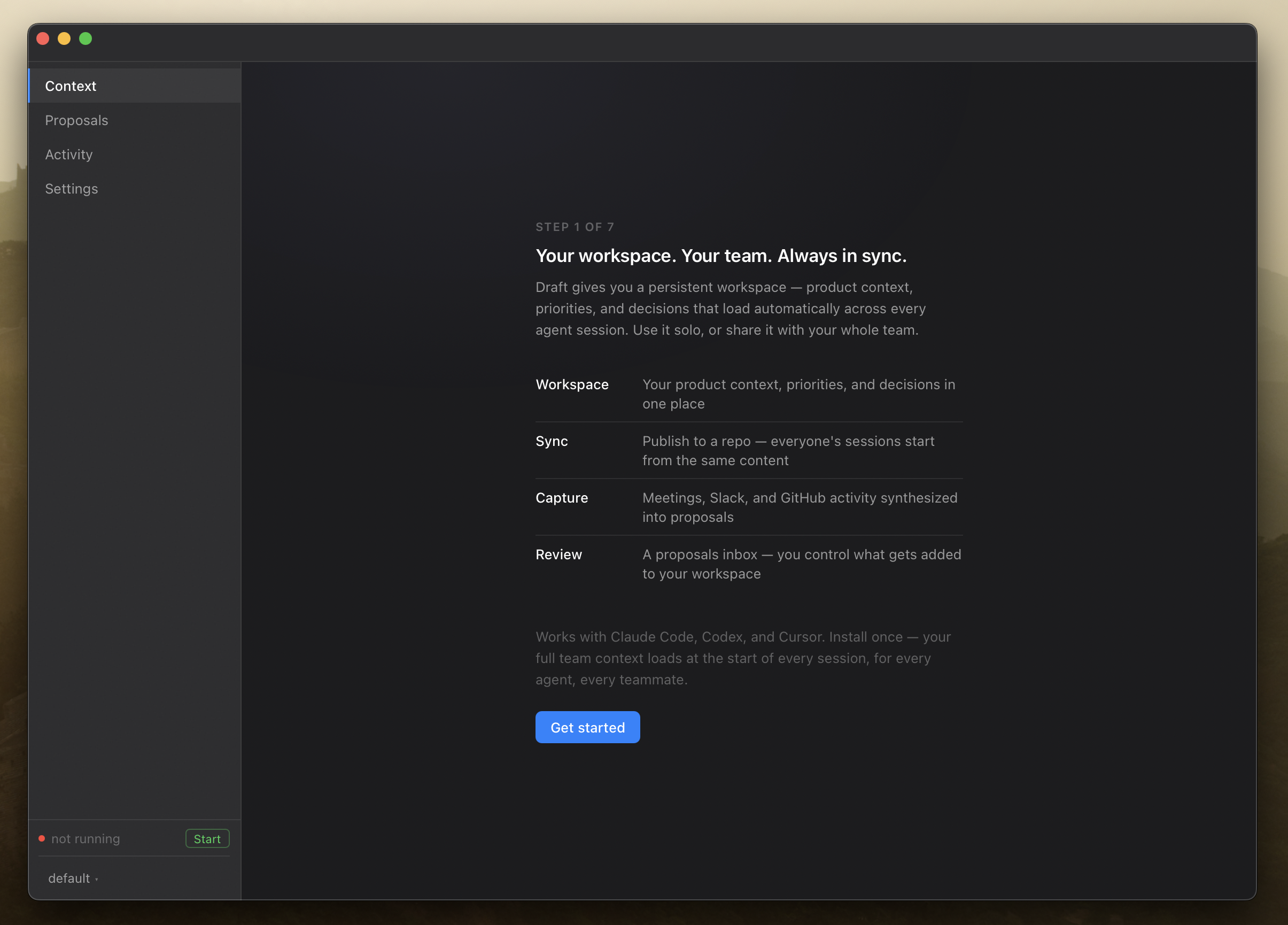
A new open-source project, Draft, has been released to solve the problem of knowledge fragmentation when collaborating with AI agents. The tool allows for context synchronization between team members, transforming scattered data from messengers and development tools into a unified knowledge base for automatic use by models.

What Happened
Developers have introduced Draft — a macOS solution that runs in the background and collects data from Slack, GitHub, and Granola notes. Using Claude, the tool synthesizes the gathered information and proposes updates for a shared or private git repository. The prepared data can be automatically integrated into the system prompts of agents such as Claude Code, Codex, OpenClaw, and Hermes.
Context
In modern teams using AI agents, a gap often arises between live discussions in Slack or notes and the technical state of the project. Draft acts as an infrastructure layer that creates a 'Shared Agent Context,' allowing scattered communication to be transformed into a structured knowledge management layer.
Why It Matters for the Industry
For the industry, the emergence of Draft signifies the possibility of forming context exchange standards between various AI agents. The project lays the groundwork for the appearance of specialized Context Management Layers, which will serve as an intermediary between corporate data and agent ecosystems, and will also allow for the integration of context synchronization mechanisms directly into CI/CD pipelines.
Why It Matters for Users
Users in teams working with AI tools will be able to significantly increase productivity: agents will no longer require manual context retelling at every new session, as they will always be 'up to speed' on the latest decisions made. This also accelerates the onboarding of new participants into AI workflows and minimizes the loss of important project details.
What Is Not Yet Known / Limitations
There is a gap in the assessment of applicability: while developers see Draft as a ready-made infrastructure layer, architecture experts point to critical data security risks and the lack of governance mechanisms when implementing it in corporate environments.
Sources
Author
Look at AI, Editorial Team