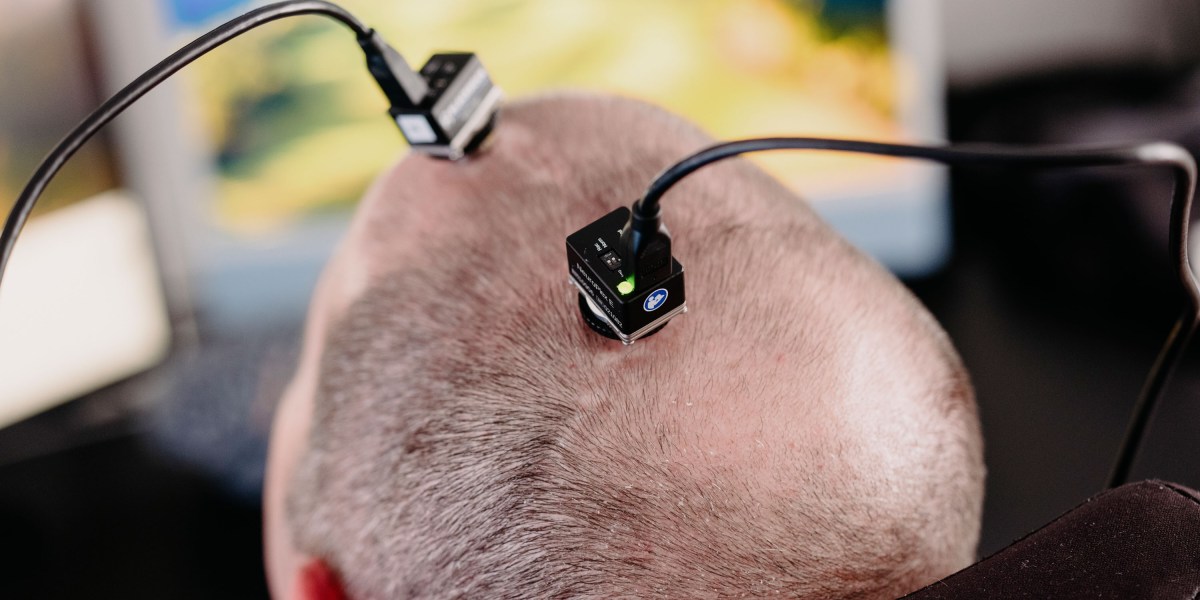
Casey Harrell, who suffers from amyotrophic lateral sclerosis (ALS), has become the first person to successfully transition the use of a brain-computer interface (BCI) from laboratory experiments into everyday life. Thanks to the implantation of neural arrays, he was able to restore his ability to communicate, accumulating more than 3,800 hours of device use in a home environment.

What Happened
Over the course of 22.6 months following surgery to implant four 64-electrode arrays into the motor cortex, Casey Harrell used the BCI system to decode neural activity. The technology allowed him to expand his vocabulary from 50 to 125,000 words, with the system learning to recognize 39 phonemes with approximately 99% accuracy.
Context
Previously, brain-computer interfaces were primarily tested under strictly controlled conditions in research laboratories. This case demonstrates the possibility of long-term, stable implant operation in a real-world environment without constant scientific supervision.
Why It Matters for the Industry
For the industry, this success signifies a transition from proof of concept (PoC) to the validation of systems for mass use. This paves the way for the creation of commercial medical products and new brain-computer interface markets that could extend beyond medicine and integrate with the digital environment via APIs to control devices.
Why It Matters for Users
For people with severe paralysis and motor impairments, this means a shift from experimental prototypes to reliable tools for daily life. The technology offers the possibility of regaining digital independence and natural communication, turning the neural interface into a full-fledged channel for interacting with the world.
Sources
Author
Look at AI Editorial Team