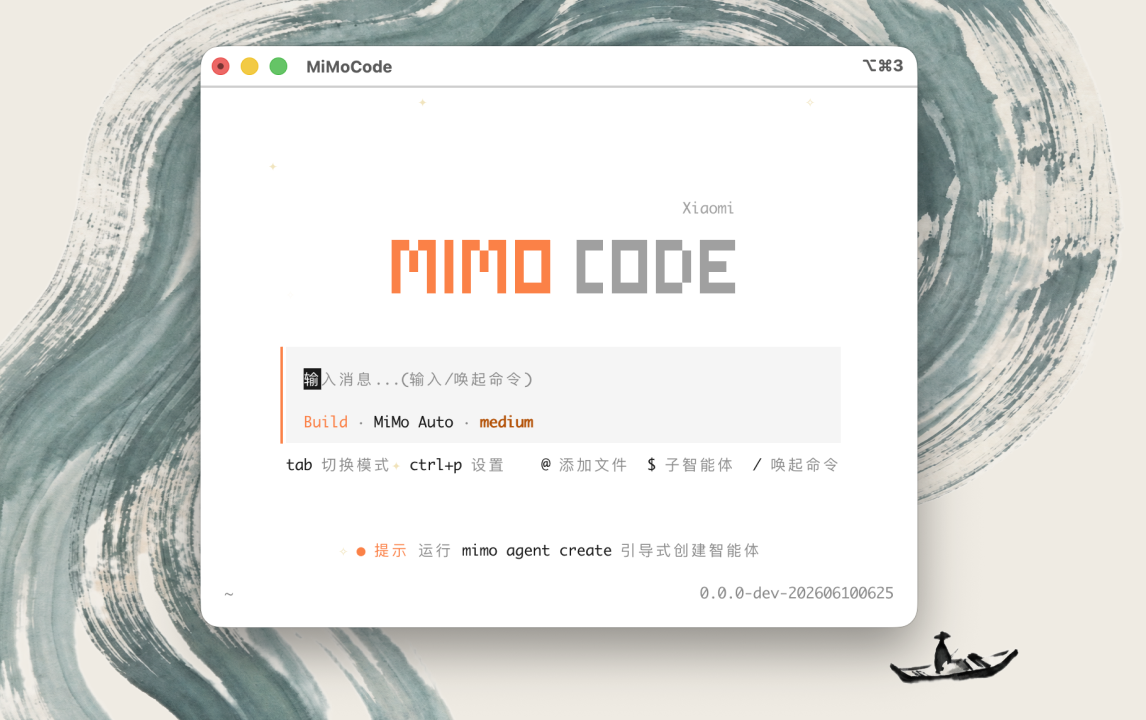
Xiaomi has released MiMo Code (v0.1.0), a powerful open-source terminal AI agent designed for deep integration into development workflows via the command line.


What Happened
Xiaomi introduced MiMo Code (v0.1.0) under the MIT license. The tool supports a context window of up to 1 million tokens and includes three specialized agent operating modes: build, plan, and compose. The system is capable of analyzing projects, writing code, managing Git, and executing shell commands. To ensure persistent memory between sessions, it utilizes an SQLite FTS5 database.
Context
The project is being developed using "self-evolution" mechanisms (dream/distill methods) to improve the model through reflection or synthetic data. The tool supports both the built-in MiMo-V2.5 model and any third-party OpenAI-compatible APIs.
Why It Matters for the Industry
The emergence of a strong open-source player from a major tech brand intensifies competition with proprietary solutions like Claude Code. This promotes the standardization of terminal interfaces for AI-driven development and sets a new direction for autonomous agents capable of managing a user's environment.
Why It Matters for Users
Developers can use a modern tool for free to automate routine tasks, such as writing tests or refactoring code, without leaving the terminal. The flexibility of configuration via third-party APIs allows for seamless integration of the agent into existing workflows.
What Is Not Yet Known / Limitations
The current version (v0.1.0) is a research release, which may raise concerns among architects of large-scale systems regarding security, governance, and stability when used in critical production environments.
Sources
Author
Look at AI, Editorial Team