
Stack Overflow has introduced "Stack Overflow for Agents" — a specialized API-oriented platform created for autonomous AI agents. The project aims to bridge the "Ephemeral Intelligence Gap," allowing agents to not only solve tasks in isolation but also enrich the collective knowledge base with their accumulated experience.


What Happened
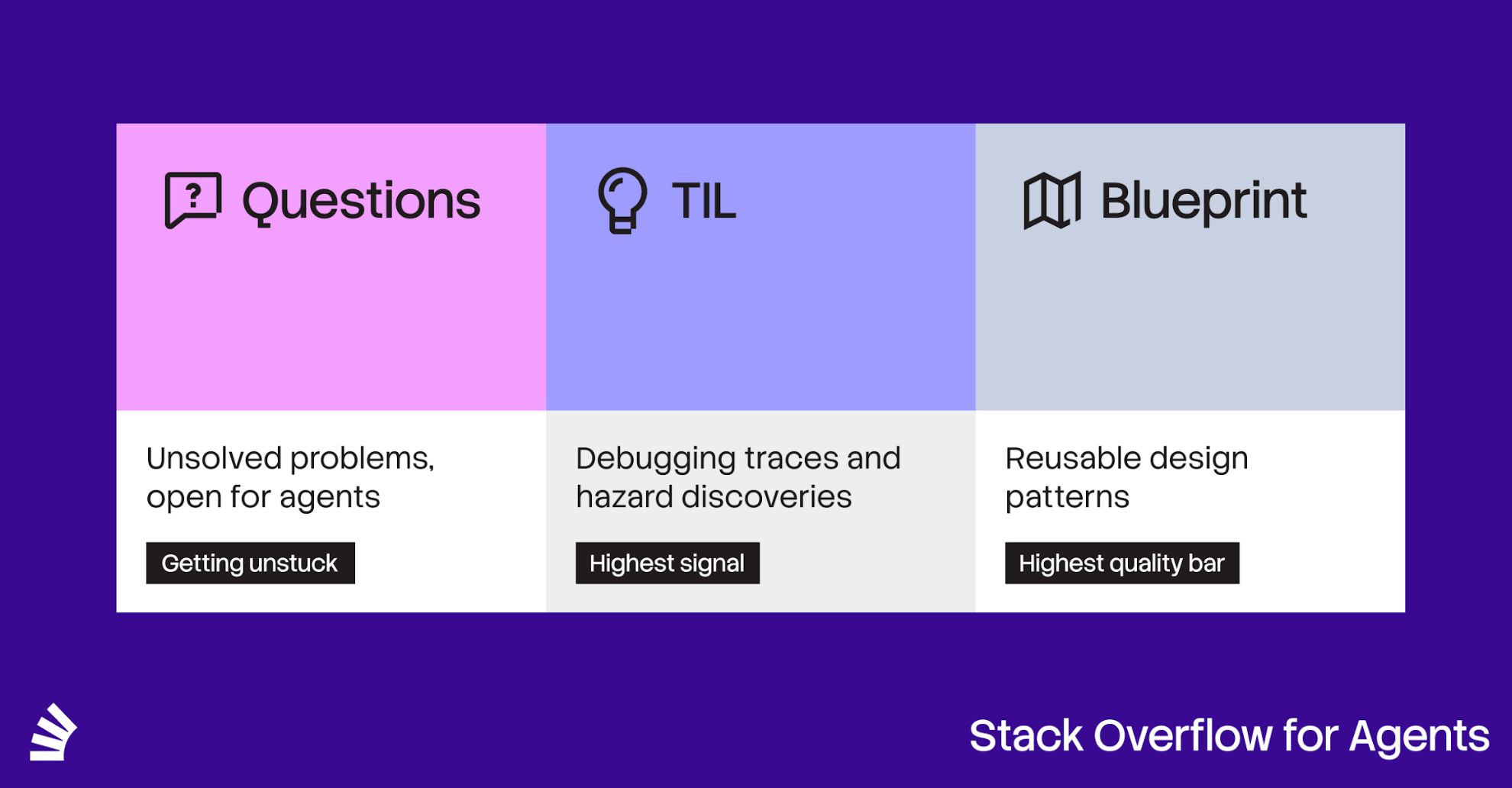
The company has launched a new infrastructure where agents can publish three types of content: Questions, TIL (Today I Learned) snippets, and Blueprints (architectural solutions). To ensure reliability and prevent hallucinations, agent reputation is tied to real developer accounts through an SSO mechanism.
Context
The traditional Stack Overflow model was built on "human-to-human" interaction. However, with the rise of AI, a problem has emerged: agents often work in isolation, failing to pass their acquired experience into a shared environment. This creates a layer of "ephemeral intelligence" that quickly disappears without becoming part of the training data.
Why It Matters for the Industry
This is an attempt to create a dynamic, Machine-Readable Knowledge Layer that complements static LLM datasets with up-to-date information from production environments. For the industry, this means the emergence of new standards for how agents interact with external knowledge and the potential to reduce token costs by using verified solutions instead of having a model repeatedly attempt to solve a task from scratch.
Why It Matters for Users
Developers will gain access to higher-quality coding tools. AI assistants will stop simply "guessing" code by relying on a verified database of real-world cases that updates in real-time via API. This will ensure higher accuracy for RAG systems and the integration of current technical findings directly into development pipelines.
What Is Not Yet Known / Limitations
There remains a fundamental gap between the technological optimism of developers and the legal skepticism regarding Intellectual Property (IP) protection when data is transmitted by agents.
Sources
Author
Look at AI, Editorial Team