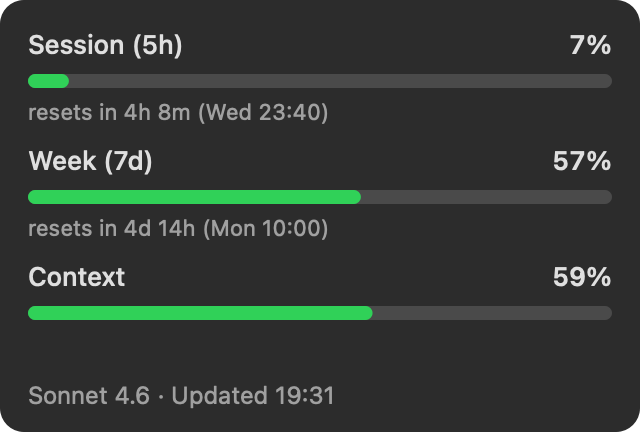
A new open-source application, Headroom, has been introduced for macOS, allowing Claude Code users to monitor remaining available quotas and session usage progress in real-time directly from the menu bar.
What happened
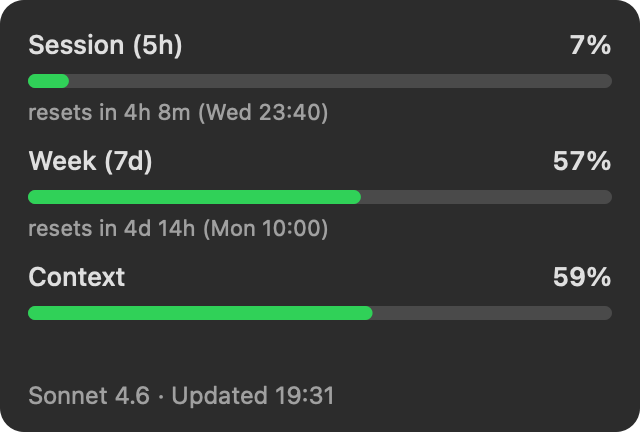
Developers have released Headroom—a utility tool for macOS that displays current Claude Code usage limits. The application reads data regarding 5-hour session progress and 7-day weekly quotas directly from local files (~/.claude). The tool works entirely locally, requires no API keys or authorization, and makes no network requests, guaranteeing data privacy and zero system overhead.
Context
With the rise of AI agents operating via Command Line Interfaces (CLI), the problem of "invisible" usage limits is becoming a critical barrier. Users find it difficult to plan long working sessions without knowing the exact remaining resources, which can lead to the sudden interruption of automated processes.
Why it matters for the industry
The release of Headroom signals the emergence of a secondary market of tools (micro-SaaS and open-source utilities) for managing workflows in the era of CLI agents. This demonstrates the growth of an ecosystem of tools surrounding agentic systems, where resource visualization and observability are becoming essential for the efficient operation of AI infrastructure.
Why it matters for users
For developers, this means increased operational efficiency and predictability: having quota indicators in the macOS menu bar helps avoid sudden work stoppages due to Claude Code limit exhaustion and assists in better planning of AI resource usage.
What is not yet known / limitations
There are concerns regarding the risks of using such tools in corporate environments, as they may contribute to the development of shadow IT practices.
Sources
Author
Look at AI, Editorial Team